
Skip to content
  • OUR WORK
    • Articles
    • Publications
    • Initiatives
      • State of the SDGs
      • Global South Perspectives
      • Equity in Research for Development
      • Ed-tech
      • Young Think Tankers
      • Digital Transformation
      • Our Common Agenda
      • Peace & Inclusive Institutions
      • Rethinking Development Effectiveness
      • Covid-19
    • Conference
      • São Paulo 2025
      • Nairobi 2023
    • News
    • Events
  • ABOUT
    • About Southern Voice
    • What we do
    • Regions
      • Global
      • Africa
      • Asia
      • Latin America & Caribbean
    • Network Members
    • How to join
    • Steering Committee
    • Secretariat
  • SUBSCRIBE

RELATED POSTS

  • Lessons from Chile: vaccination and containing the pandemic

    Chile faces a paradoxical situation, between a successful vaccination campaign and an increase in cases that brought hospital occupancy to…
  • Argentina and Chile: non-compliance with quarantine and criminal sanctions

    Both governments resorted to quarantine to stop the virus from spreading and sought the population’s compliance by threatening with criminal…

  • COVID-19, Public Health, and Criminal Law: Criminalising Non-Compliance with Quarantines in Chile and Argentina

    Comparative analysis of the use of criminal law to enforce quarantines in the context of the COVID-19 pandemic in Chile…

  • View Larger Image

The Use of Preventive Prison in Chile

By
Mauricio Duce
2024-01-27T16:19:04+00:00March 14, 2022|
  • ENGLISH

  • ESPAÑOL

  • ENGLISH

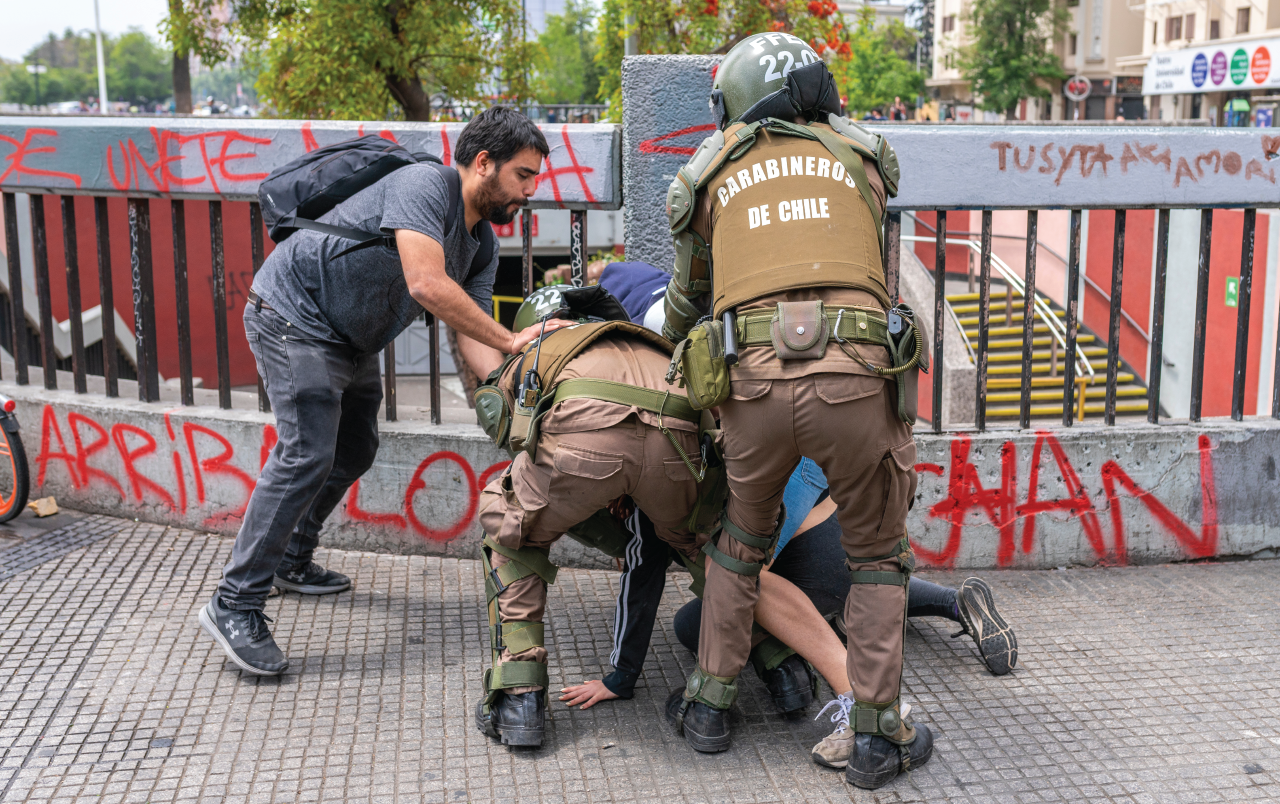
Lately, the use of pre-trial detention has been present in the public debate in Chile, especially concerning those who have been called presos de la revuelta [prisoners of the revolt]. It presents us with an opportunity for a general analysis of what has happened using this precautionary measure in Chile.

The accusatory Code of Criminal Procedure of 2000 (CPP in Spanish), in its original version, sought to install a use of pre-trial detention based on “a precautionary paradigm”. In other words, it was an exceptional measure that could only be used in justified cases where there was a concrete need. It was thus an attempt to abandon the notion that prevailed under the previous inquisitorial system. In that system, pre-trial detention was a necessary and automatic consequence of proceedings against the accused, which strongly impacted its use. For example, the data available for 1987 show that 57% of the people in prison were unconvicted prisoners. It was serious. The logical approach in a state governed by the rule of law is that imprisoned people should be so because the majority of them have been convicted. For example, in Europe, several countries have rates of 20% or less. In the United States, it averages around 23%.

The change in logic introduced by the CPP responded to the need to make the legislation compatible with Chile’s international commitments. These instruments regulate preventive detention as described above. It requires rationalising the use of this norm. Thus, the legislator of the original CPP defined the cases where pre-trial detention was considered legitimate in a stricter manner. He established a design with various limits to transform this institution into a truly exceptional one, e.g., by introducing multiple alternatives to its use. These changes significantly impacted the system’s practice, which translated into positive statistical indicators. For example, in 2007,  the system was already in operation throughout the country. As a result, the number of unconvicted prisoners had dropped to 24.6% of the total number of people incarcerated. In a few years, the new system produced a rationalisation effect based on three fundamental indicators: the percentage of the total number of persons deprived of liberty, the absolute number of persons deprived of freedom and their rate per hundred thousand inhabitants.

Today the use of pre-trial detention is increasingly approaching that of the inquisitorial system, i.e., as a necessary consequence of the process. Figures from Gendarmería de Chile as of December 31st, 2021, show that the percentage of unconvicted prisoners had risen to 37.5% of the total number of prisoners.

How can we explain what happened? Several phenomena can be identified, three in particular.

Firstly, the legislator has introduced many reforms that have facilitated a less restrictive use of pre-trial detention. These include some direct reforms to the CPP rules that attempted to force a more automatic use of pre-trial detention for some instances. On the other hand, a set of legal reforms to regulations that produced increased penalties in specific offence categories, facilitating the use of pre-trial detention, for example, in property crimes. These changes can be regarded as a counter-reform in this area. It is complex, but the main one is that safety demands strongly pressured the political class. Faced with the inability to address the issue in a sophisticated way, the political class found in regulating this measure and increasing penalties a space to show that something was being done to improve the situation (without evidence-based diagnoses, incidentally).

A second phenomenon that explains these setbacks is that this measure has become the system’s primary punitive response from the citizens’ point of view. There is an enormous expectation that it will be used whenever a case perceived as severe or affecting the sensibilities of different groups arises. The function of punishment has been culturally replaced by preventive detention. A paradox emerges: those who advocate preventing the abusive use of this measure when used against them then demand it in cases of crimes that affect their causes or interests of the most diverse nature. If the system does not decree it, there will be strong public criticism pointing to impunity or corruption or a moral defect of the judges (usually associated with the notion of excessive “garantismo” [penal guarantees]. It is a phenomenon that is neither new nor exclusive to Chile.

Finally, behind these setbacks in the use of pre-trial detention, there are also other problems. They mainly relate to a decline in the work quality of the justice system. It occurs at various levels, for example, in the quality of the information used to discuss it, in the litigation of the system’s actors where we see a very mechanised and formal debate, in the justification of the measure when it is granted in court, among others.

We are facing a complex problem that has been very present for years. The renewed interest in this issue opens up an opportunity for significant systemic improvements projected over time. These include getting serious about rationalising the use of this measure, even if it hurts. It is achieved by changing some legal rules and thinking about improvements at the institutional level, especially by addressing social expectations.

Text editor: Gabriela Keseberg Dávalos

  • ESPAÑOL

El uso de la prisión preventiva en Chile

por Mauricio Duce, Espacio Público

El uso de la prisión preventiva ha estado presente en el debate público en Chile en el último tiempo, especialmente a partir de quienes han sido denominados como ¨presos de la revuelta¨. Esta preocupación es una oportunidad para un análisis general acerca de lo que ha ocurrido con el uso de esta medida cautelar en Chile.

El Código Procesal Penal acusatorio del año 2.000 (el CPP), en su versión original, pretendió instalar una concepción en el uso de la prisión preventiva basado en “un paradigma cautelar”.  Es decir, que se trata de una medida excepcional que sólo puede ser utilizada en casos justificados en los que exista una necesidad concreta. De esta forma, se intentó abandonar la noción que predominó bajo la vigencia del sistema inquisitivo previo. En éste, la prisión preventiva era una consecuencia necesaria y automática de la existencia de un proceso en contra del imputado, lo que tenía un fuerte impacto en su uso. Por ejemplo, los datos disponibles del año 1987 muestran que del total de personas presas, el 57% correspondía a presos sin condena. Esto era grave. Lo lógico en un estado de derecho es que la gente que esté presa lo sea debido a que muy mayoritariamente tenga la calidad de condenada. Por ejemplo, en Europa, varios países tienen tasas que se mueven en un rango de 20% o menos. En los Estados Unidos gira en torno al 23%.

El cambio de lógica introducido por el CPP obedeció a la necesidad de compatibilizar la legislación con los compromisos internacionales adquiridos por Chile. Estos instrumentos regulan la prisión preventiva en la lógica descrita. Ella imponía la necesidad de racionalizar el uso de esta norma. Así, el legislador del CPP original definió de manera más estricta los casos en que se consideraba legítimo utilizar a la prisión preventiva.  Estableció un diseño con diversos límites tendientes a transformar esta institución en una verdaderamente excepcional, por ejemplo, introduciendo diversas alternativas a su uso. Estos cambios tuvieron un impacto significativo en la práctica del sistema que se tradujo en indicadores estadísticos positivos. Por ejemplo, en el año 2007, en el que el sistema ya estaba funcionando en todo el país, los presos sin condena habían bajado a 24,6% del total de personas encarceladas. En pocos años el nuevo sistema fue capaz de producir un efecto de racionalización en base a tres indicadores básicos: el porcentaje dentro del total de las personas privadas de libertad, el número absoluto de privados de libertad y su tasa por cien mil habitantes.

Hoy el uso de  la prisión preventiva se acerca cada vez más a la del sistema inquisitivo, es decir, como una consecuencia necesaria del proceso. Las cifras de Gendarmería de Chile al 31 de diciembre de 2021 muestran que el porcentaje de presos sin condena había subido a un 37,5% del total de personas presas.

¿Cómo se explica lo ocurrido? Se pueden identificar varios fenómenos, tres en concreto.

En primer lugar, el legislador ha introducido diversas reformas que han facilitado un uso menos restrictivo de la prisión preventiva. Se trata de algunas reformas directas a las reglas del CPP que intentaron forzar un uso más automático de la prisión preventiva para ciertos casos. Por otra parte, de un conjunto de reformas legales a reglas que produjeron un aumento de las penas en ciertas categorías de delitos facilitando en ellos el uso la prisión preventiva, por ejemplo, en los delitos contra la propiedad. Estos cambios pueden ser considerados como una contrarreforma en la materia. Las razones de esta son complejas, pero la central es que la clase política estuvo fuertemente presionada por demandas de seguridad.  Frente a la incapacidad de abordar el tema de una manera sofisticada encontró en la regulación de esta medida y en el aumento de las penas un espacio en el que pudo mostrar que se hacían cosas para mejorar la situación (por cierto, sin diagnósticos basados en evidencia).

Un segundo fenómeno que explica los retrocesos es consecuencia de que esta medida se ha ido transformado en la principal respuesta punitiva del sistema desde el punto de vista de la ciudadanía.  Por lo mismo, existe una enorme expectativa de que sea utilizada cada vez que se presenta un caso percibido como grave o que afecte a una sensibilidad de a distintos grupos. La función de la pena ha sido reemplazada culturalmente por la prisión preventiva. Se produce una paradoja: los que abogan por evitar el uso abusivo de esta medida cuando se usa en contra de ellos, luego la exigen para los casos de los delitos que afectan a sus causas o intereses de la más diversa índole. Si el sistema no la decreta se formularán fuertes críticas públicas señalando que se ha generado impunidad o hay corrupción o de un defecto moral de los jueces (normalmente asociado a la noción del garantismo excesivo). Se trata de un fenómeno que no es nuevo ni menos exclusivo de Chile.

Finalmente, detrás de los retrocesos en el uso de la prisión preventiva hay también algunos problemas de pérdida de calidad de trabajo del sistema de justicia. Ellos se producen en varios niveles, por ejemplo, en la calidad de la información que se usa al discutirla, en el litigio de los actores del sistema en los que se aprecia un debate muy mecanizado y formal, en la fundamentación de la medida cuando ella es concedida en los tribunales, entre otras.

Estamos frente a un problema complejo que viene presentándose con intensidad hace años. El renovado interés en esta materia abre una oportunidad para introducir mejoras sistémicas significativas con capacidad de proyectarse en el tiempo. Ellas pasan por tomarnos en serio el objetivo de racionalizar el uso de esta medida, incluso hasta que nos duela. Eso no sólo se logra cambiando algunas reglas legales, sino pensando también en mejoras a nivel institucional y, especialmente, abordando las expectativas sociales.

RELATED POSTS

  • Lessons from Chile: vaccination and containing the pandemic

    Chile faces a paradoxical situation, between a successful vaccination campaign and an increase in cases that brought hospital occupancy to…

  • Argentina and Chile: non-compliance with quarantine and criminal sanctions

    Both governments resorted to quarantine to stop the virus from spreading and sought the population’s compliance by threatening with criminal…

  • COVID-19, Public Health, and Criminal Law: Criminalising Non-Compliance with Quarantines in Chile and Argentina

    Comparative analysis of the use of criminal law to enforce quarantines in the context of the COVID-19 pandemic in Chile…

Share this Story

FacebookTwitterLinkedIn

RELATED POSTS

  • Lessons from Chile: vaccination and containing the pandemic

    Chile faces a paradoxical situation, between a successful vaccination campaign and an increase in cases that brought hospital occupancy to…

  • Argentina and Chile: non-compliance with quarantine and criminal sanctions

    Both governments resorted to quarantine to stop the virus from spreading and sought the population’s compliance by threatening with criminal…

  • COVID-19, Public Health, and Criminal Law: Criminalising Non-Compliance with Quarantines in Chile and Argentina

    Comparative analysis of the use of criminal law to enforce quarantines in the context of the COVID-19 pandemic in Chile…


Careers

Contact Us

info@southernvoice.org | Privacy Policy

Southern perspectives.

Global debates.

RELATED POSTS

  • Lessons from Chile: vaccination and containing the pandemic

    Chile faces a paradoxical situation, between a successful vaccination campaign and an increase in cases that brought hospital occupancy to…

  • Argentina and Chile: non-compliance with quarantine and criminal sanctions

    Both governments resorted to quarantine to stop the virus from spreading and sought the population’s compliance by threatening with criminal…

  • COVID-19, Public Health, and Criminal Law: Criminalising Non-Compliance with Quarantines in Chile and Argentina

    Comparative analysis of the use of criminal law to enforce quarantines in the context of the COVID-19 pandemic in Chile…

Page load link
Southern Voice Logo

Gender-Inclusive Disaster Risk Management in Mexico

Mexico is highly exposed to natural hazards such as earthquakes, hurricanes, and extreme rainfall, with climate change further intensifying these risks. Disasters often have unequal impacts, with women, girls, indigenous and the LGBTQI+ population  facing heightened vulnerability due to structural inequalities, limited access to economic opportunities, exposure to violence, and the disproportionate burden of caregiving responsibilities. Despite evidence of these differentiated effects, there is still a lack of comprehensive data to fully capture their scope and duration. At the same time, Mexico is at a pivotal moment with the current administration prioritising gender equality and the National Centre for Disaster Prevention (CENAPRED) preparing its first National Strategy for Integrated Disaster Risk Management (ENGIRD). This creates a unique opportunity to embed gender and intersectional perspectives into disaster policy and practice.

ETHOS’ efforts are geared toward strengthening women’s resilience to disasters in Mexico, particularly hurricanes, through the mainstreaming of gender in the ENGIRD. This will enable women to better prevent, respond to, and recover from disasters. The project assesses the distinct impacts of disasters on women, adolescents, and girls, with a focus on hurricanes affecting Acapulco, Guerrero. It also equips decision-makers with practical recommendations, drawing on evidence gathered through in-depth interviews and surveys. Ultimately, the project seeks to generate gender-disaggregated data on disaster impacts to inform specific action lines within the ENGIRD, and to guide future policy development.

For more information, please visit:

https://www.ethos.org.mx/inclusion/publicaciones/evidence_to_integrate_gender_perspective_in_disaster_risk_management_in_mexico

https://www.ethos.org.mx/inclusion/publicaciones/evidence_for_integrating_the_gender_perspective_into_comprehensive_disaster_risk_management_in_mexico

https://www.ethos.org.mx/inclusion/columnas/disaster_management_with_a_gender_perspective_a_historic_debt

Assessing Care Work Skills in Peru, Ecuador and Uruguay

In Latin America, caregiving has long been undervalued, with women carrying most of the responsibility both within households and in paid care roles. Despite the sector’s scale, working conditions are often poor, and opportunities for professional growth remain limited. Regional care agendas have therefore prioritised reducing the burden on women, redistributing caregiving tasks, and revaluing care work by transforming it into dignified, well-paid employment. Within this framework, Early Childhood Education and Care (ECEC) programmes are particularly important, as they shape children’s development while relying heavily on women caregivers. Strengthening certification systems in this workforce offers a pathway to increased recognition, professionalisation, and improved quality of care.

For this project, the Grupo de Análisis para el Desarrollo (GRADE – Perú) and the Fundación para el Avance de las Reformas y Oportunidades (FARO – Ecuador) teams are working to enhance recognition of female caregivers’ critical roles, improve their working conditions, and expand certification programmes to create pathways to decent employment and career growth. The project contributes to regional knowledge by providing evidence on caregivers’ perspectives regarding the value of certification for their employment and well-being. It also offers a comparative analysis across Peru, Uruguay, and Ecuador, examining the characteristics, achievements, and obstacles of skill certification processes in ECEC programmes. By engaging stakeholders and disseminating findings across these countries, the project embeds a gender-sensitive approach into certification, aiming not only to improve care quality, but also to support women’s educational and professional trajectories.

Project video: https://drive.google.com/file/d/1fuSEpdHRnUVo3DTaNN6fGR4-59Q_bF3t/view?usp=sharing

Synthesising Evidence for Women’s Entrepreneurship in Senegal

Across Senegal, women entrepreneurs play a vital role in driving innovation, creating jobs, and supporting communities. Yet, their potential remains constrained by systemic barriers that make it harder to start and grow businesses. 

Challenges such as limited access to finance, markets, and professional networks, alongside entrenched social norms, continue to limit opportunities. Recognising this, the Government of Senegal has placed women’s entrepreneurship firmly on the national development agenda, seeking to strengthen existing support systems and craft more responsive policies. Initiative Prospective Agricole et Rural (IPAR – Senegal)’s efforts are geared towards strengthening the economic empowerment of women entrepreneurs in agriculture and other sectors in Senegal, through the implementation of supportive public policies informed by data. IPAR researchers have been working to understand with precision 1) the profile of women entrepreneurs in Senegal, particularly in agriculture, and 2) the systemic barriers they face, and their needs in terms of entrepreneurial development (such as financing, training, access to markets etc). Collaborating closely with the relevant government stakeholders, the team aims to inform the implementation of the country’s strategy in favour of entrepreneurship.

Creating Care Solutions for Women’s Economic Growth in Guinea-Bissau

In rural Guinea-Bissau, women play a central role in both household responsibilities and agricultural labour, particularly in the cashew sector, which drives the national economy. Yet, their productivity and economic empowerment are constrained by the heavy burden of unpaid care work and by the scarcity of childcare services. During harvest seasons, women often bring young children to the fields, affecting both their work and their children’s safety. This project explores an innovative childcare model tailored to rural realities, and designed to free women’s time, support their livelihoods, and strengthen early childhood development. By linking gender equity with economic productivity, the initiative aims to generate lasting benefits for both families and communities.

The Bissau Economics Lab (BELAB) team is working to reduce the time women in rural Guinea-Bissau spend on unpaid care work, while increasing their economic productivity and income. By expanding and improving childcare provision, the project also aims to strengthen children’s health and cognitive development. To this end, the team is piloting an extended preschool day to assess its effects on children’s attendance, women’s time use, mental health, and employment. They are also testing implementation strategies and identifying factors that enable or hinder effective early childhood development programmes. Ultimately, the project contributes to global knowledge on rethinking childcare in low-resource rural areas, particularly where agricultural demands shape daily life.

Designing Curriculum Pathways for Indonesian Girls in STEM

Science, technology, engineering and mathematics (STEM) education is essential for nurturing future-ready talent and opportunities in a digital and technology-driven economic landscape. It is a cornerstone of the country’s “Golden Indonesia” vision to build strong human resources and foster innovation to drive sustainable development. However, persistent gender disparities remain. While many women pursue higher education, they are less likely to choose STEM fields or continue into STEM careers. 

This gap is shaped by a combination of factors, including cultural expectations, limited early exposure to STEM subjects, and the perception that these fields are traditionally male-dominated. Schools play a crucial role in shifting this narrative and encourage more girls to pursue and excel in STEM-related subjects. 

This project seeks to advance gender equity in STEM education in Indonesia. Center for Indonesian Policy Studies (CIPS) researchers are working with secondary school leaders to encourage female student interests and achievements in STEM subjects in order to increase more women to join STEM fields at the higher education level; while also contributing to the existing body of knowledge on gender equity within the country.

By engaging with local governments, school teachers, and consulting gender experts, the team aims to uncover the root causes of underrepresentation, map and identify barriers to entry, and develop practical teaching guidelines for gender-sensitive educational instruction in secondary school classrooms. The project envisions a future where teachers actively integrate gender-responsive learning principles into their classroom materials, and government staff at all levels prioritise and support schools in adopting gender-sensitive approaches that foster more girls and women enter into STEM fields.

Advancing Gender-Equitable Politics in Pakistan

Politics in Pakistan has long been considered a male-dominated sphere, despite women comprising nearly half of the population. Globally, women hold only about a quarter of political positions, and in Pakistan, their representation within party decision-making structures is even more limited.

While quotas have helped increase the number of women in parliament, their voices within party leadership remain minimal. Women’s divisions within parties are often inactive and guided by male-dominated agendas, leaving women sidelined from the very spaces where key decisions are made. Addressing this political inequality, which sits at the root of many other gender gaps, is therefore critical.

This Sustainable Development Policy Institute (SDPI) project aims to foster a more gender-equitable political environment by advocating for increased representation of women in party leadership and in decision-making. Through research, policy briefs, and media advocacy, it will highlight the barriers women face and propose concrete reforms to strengthen their roles.

Knowledge-sharing platforms such as consultations, workshops, and partnerships with parliamentarians, civil society, and women’s rights bodies will help build consensus. The ultimate vision is to secure legislative change that institutionalises women’s voices within political parties, paving the way for more gender inclusive governance in Pakistan.

Go to Top