
1 for 8 Billion: Rethinking Leadership at a Time of Multilateral Crisis
By 
 2026-02-04T14:51:22+00:00February 4, 2026|
Multilateralism is now facing one of its deepest credibility crises in decades. Armed conflicts persist without resolution, democratic norms are openly contested, and international responses to political crises have become increasingly fragmented. Recent developments have further exposed the limits of a multilateral order that has struggled not only to act decisively but also to uphold and enforce the very norms it claims to defend.
This is not an isolated institutional failure, but a deeper crisis of trust in leadership and governance — driven by a system that concentrates power in the hands of a few while repeatedly failing to respond to the voices and needs of the many.
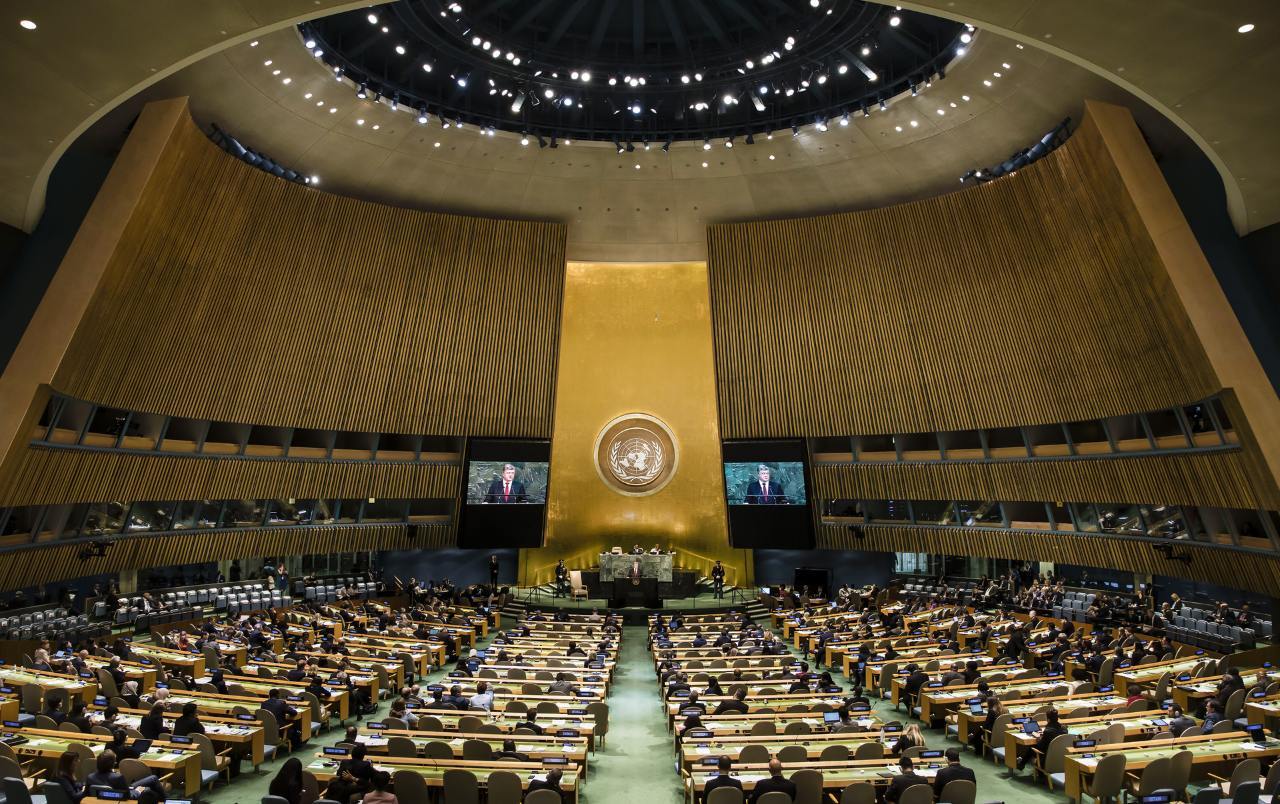
At the centre of this tension lies a paradox that is rarely addressed openly. As the United Nations (UN) marked its 80th anniversary in 2025, it did so in a profoundly altered global order defined by shifting power balances, contested norms, and growing demands for institutional transformation. In this context, the UN Secretary-General is expected to act as a global mediator and a central diplomatic actor. However, at a moment that calls for renewal, the selection of the UN’s highest office continues to reflect structures shaped by an earlier era, rather than the plural and contested world it is meant to serve.
Decisions that shape the lives of eight billion people continue to be made through an elite-driven mechanism few outside diplomatic circles truly understand.
When Leadership Truly Matters
What effective multilateral action can look like is not a theoretical question. History illustrates its significance, particularly for the Global South.
- Dag Hammarskjöld (UN Secretary-General 1953-1961) redefined the scope of the office’s independence during the Congo crisis, asserting the organisation’s capacity to act autonomously in decolonisation contexts. His legacy reminds us that the office can challenge power, not merely accommodate it.
- In 1962, as the world stood on the brink of nuclear war, it was not a head of state who helped open diplomatic space during the Cuban Missile Crisis, but U Thant (UN Secretary-General 1961-1971). He proposed a temporary pause in military action and facilitated a channel for dialogue between Washington and Moscow. His intervention bought something indispensable: time.
- In the late 1980s, Javier Pérez de Cuéllar (UN Secretary-General 1982-1991) played a central mediating role in negotiating the ceasefire that ended the Iran–Iraq War and later paved the way for Namibia’s independence. These outcomes reshaped regional dynamics and altered the lives of millions.
- More recently, Kofi Annan (UN Secretary-General 1997-2006) advanced the Millennium Development Goals, placing global poverty reduction at the centre of international cooperation and giving Global South development priorities unprecedented visibility on the world stage.
These moments did not occur by chance. They were shaped by the political space available to the position. When multilateral leadership works, it is deliberate, and its impact is unmistakable.
The selection of the next Secretary-General in 2026 will not be a routine transition, nor a purely administrative exercise. It will be a political test of whether the multilateral system can renew its legitimacy at a moment when confidence in global institutions is eroding.
How the Secretary-General is Really Chosen
For much of the UN’s history, its highest position was chosen almost entirely behind closed doors. In more than seventy years, there were no public candidates, vision statements, or hearings. The General Assembly formally appointed the Secretary-General, but in practice endorsed a choice already negotiated among the permanent members of the Security Council (just five countries out of 193 Member States).
Reforms introduced in 2016 marked a shift, due in large part to sustained advocacy by the 1 for 7 Billion campaign, a precursor to the current 1 for 8 Billion initiative. For the first time, candidates presented vision statements, participated in public hearings, and faced questions from Member States and civil society. These changes mattered, signalling that the selection framework could no longer remain entirely insulated from public scrutiny. Yet they did not fundamentally alter where power resides.
The decisive stage of the selection still takes place in informal “straw polls” inside the Security Council — confidential ballots that signal which candidates are acceptable, or unacceptable, to the permanent members. These votes are neither formally recorded nor publicly released, and they are not subject to meaningful investigation.
This gap between appearance and reality carries consequences. Authority that emerges from open, inclusive, and transparent selection processes enters office with greater legitimacy and moral authority, particularly in moments that demand political courage and clarity of leadership. Symbolic openness cannot compensate for structural exclusion.
Today, the demands placed on multilateral action are arguably greater than ever. The United Nations is expected to respond to conflicts entangled with great-power rivalry, coordinate global action, and navigate emerging complexities. Authority under such conditions cannot be improvised. It is within this context that the 1 for 8 Billion campaign has emerged.
The campaign addresses a fundamental question: how is global leadership chosen? Its premise is simple but far-reaching. A system that affects eight billion people cannot afford decision-making arrangements that remain opaque, exclusionary, or resistant to scrutiny.
The campaign calls for targeted reforms: strengthening transparency around the Security Council’s role; improving the inclusiveness of General Assembly hearings; promoting joint nominations and the nomination of non-nationals; and upholding strict integrity standards, including full disclosure of campaign financing and the rejection of political trade-offs.
Nominating Women Is Not Optional
Exceptional circumstances demand exceptional leadership. It demands leadership that moves beyond the status quo and enables bold, transformative decisions. After more than eighty years of men-only tenure, calling for women candidates is no longer a symbolic aspiration, but a question of whether the United Nations is prepared to draw on the kind of leadership its core mandate requires.
As documented by GWL Voices: Women currently hold 44% of leadership positions across multilateral organisations and account for an average of 43% of senior management teams. Yet, 19 of the 54 organisations analysed have never been led by a woman, and a further 17 have done so only once. The pattern is clear: the problem is not the supply of women’s leadership, but the informal rules of power. What limits women’s access to the most senior positions is not a lack of experience or capacity, but the persistence of selection practices that favour continuity and familiar pathways, even when broader pools of leadership are available.
This is not only a normative case, but a strategic one. Evidence shows that women’s meaningful participation in conflict prevention and peace processes leads to more durable outcomes — yet women remain largely excluded from the most consequential negotiating tables. This gap exposes the limits of rhetoric and underscores the urgency of translating principles into action, beginning with the nomination of women candidates for the Secretary-General role.
Against this backdrop, public debate has increasingly pointed to women leaders such as Rebeca Grynspan and Ivonne Abdel Baki, reflecting a broader recognition of the depth of available leadership. That debate has begun to translate into formal nomination efforts in the case of Michelle Bachelet, including a joint initiative by Member States such as Chile, Brazil, and Mexico. While this marks a significant step forward, a broader pattern persists: nomination pathways continue to be shaped by informal norms and political conventions that narrow the field well before questions of merit are formally assessed.
Southern Voice’s Case for 1 for 8 Billion
The 1 for 8 Billion campaign speaks directly to Southern Voice’s core purpose of rebalancing knowledge and addressing power asymmetries in global development. Who leads multilateral organisations, how leadership is selected, and which voices are included in these processes shape not only the institutions we build, but also how decisions are made and whose knowledge, priorities, and evidence are taken seriously.
Leadership selection mechanisms, therefore, have profound implications for global governance and policy outcomes. As a network committed to amplifying Global South perspectives, we recognise the significance of this historical moment and the urgent need to advance a multilateral system that is inclusive, transparent, and responsive to today’s most pressing global challenges.
Supporting the campaign is not about endorsing specific candidates. It is about recognising that how decisions are made shapes power.
The open letter promoted by the 1 for 8 Billion campaign offers a concrete opportunity to defend a fair, open, inclusive, and credible framework for appointing the next Secretary-General. At a time when multilateralism is being tested — not only by geopolitical rivalry, but by its own inability to respond to legitimate demands — the constitution of global leadership matters as much as who occupies the role.
We invite colleagues and partners to support the 1 for 8 Billion campaign by endorsing the Open Letter, a concrete step toward a more transparent, inclusive, and credible approach to appointing the next Secretary-General.