
This side event brings together feminist movements, economists, and care practitioners to present bold policy proposals for financing care systems…

Centering Care through Collective Action: A Look Back at 2025
By  2025-12-18T12:44:08+00:00December 17, 2025|
As 2025 draws to a close, the following reviews some key moments in a year of collective action to center the care agenda in relevant global development debates. Through the text, and at the end, you will find links to various documents that provide further insights and concrete recommendations on the topics addressed.
Conflicts, climate-related disasters, migration and aging populations have intensified the need for care work; but the systems responsible for this work, weakened by each crisis, are still not being adequately supported. This is in part due to the remaining under-recognition, in key political spaces, of the central part care work plays in sustainable development.
Over the past few years, we have seen progress in this area. Countries in the Global South have developed numerous policies to advance the right to care. At the UN level, its importance has been acknowledged in the Secretary-General’s 2021 Our Common Agenda report; in the observation, since 2023, of an International Day of Care and Support; or, most recently, in a draft resolution highlighting the contributions of care to sustainable development. The G20, as well, has increasingly acknowledged care in its Leaders’ Declarations.
Still, today, care work remains under-discussed in many relevant arenas – leading to action and investment that are still insufficient to meet current and future demand for care.
2025 in context
In recent years, IDRC, Southern Voice, the Global Alliance for Care, UNRISD, UNWomen, GRADE, CIPPEC, the Care20 Collaborative, the Gender and Trade Network, and other Global South partners, have joined forces through various initiatives, with a shared aim: bring the care agenda to the center of relevant global development debates.
The year 2025 provided important opportunities to further this effort, building collective momentum as we marked the 30th Anniversary of the adoption of the Beijing Declaration and Platform for Action – the “global blueprint” for gender equality.
Among these opportunities were the 4th International Financing for Development Conference (FfD4), hosted in Seville, Spain in June/July; COP30 in Belem, Brazil; and South Africa’s G20.
However, these milestones took place in a challenging context of growing backlash against gender equality, shrinking development assistance, and renewed shocks to global economic stability.
This reinforced the urgency of protecting and advancing gender equality gains, increasingly in peril.
Part 1: the road to Sevilla
Limited financing remains one of the biggest challenges to the development of strong, sustainable care systems.
FfD4 offered a once-in-a-decade opportunity to elevate the urgency of investing in care, as an integral part of a broader sustainable development strategy.
Building on years of feminist research, advocacy, and coordination, we worked collectively to center, in the lead up to FfD4, the necessary measures to ensure the adequate financing of care.
▪️ March: what does financing care require?
Our first milestone for 2025 was the 69th Session of the Commission on the Status of Women (CSW69) – a chance to unpack the main roadblocks which FfD4 should address.
We convened a diverse group of actors, including feminist economists, civil society organizations, regional institutions, and policy advocates – some of them part of the FfD4 civil society mechanism – for a workshop, followed by a CSW side-event.
Across exchanges, a clear consensus emerged that care is foundational to sustainable development, inclusive economic growth, peace, and climate resilience. Therefore, it must be recognized and financed as such – which requires sustained public investment, not fragmented or short-term solutions.
But as interventions highlighted, for many countries of the Global South, enabling this kind of public investment means addressing high levels of debt repayments, and weak domestic resource mobilisation. It also means integrating the role of community care networks in climate resilience into climate adaptation frameworks, without which the corresponding climate financing does not reach these critical actors.
▪️ April: how do we achieve this?
The next step was to spotlight what FfD4 could concretely deliver to address these issues.
For this, we brought together gender equality advocates, development finance experts, climate justice networks, and other key actors – for an online side-event of the 4th Session of the FfD4 Preparatory Committee.
The conversation surfaced many important calls – which participants had been advocating towards FfD4, and would keep promoting as we got closer to Sevilla. They included:
- Advancing a UN debt convention to ensure fairer restructuring processes
- Establishing a global minimum tax rate of 25% for multinationals to address persistent revenue challenges
- Reallocating Special Drawing Rights (SDRs), to fund care and climate adaptation
- Updating climate adaptation frameworks, NDCs and other climate action tools, to recognize the role of unpaid and community-based care work.
Overarchingly, the meeting reaffirmed the importance of a global commitment to financing care as a component of broader sustainable development strategies – and of sustained, collective advocacy to turn this commitment into action.
▪️ June and July: what next?
By the time FfD4 convened, expectations were modest, with negotiation reports signaling slow progress on key structural issues. Our focus, at this stage, was on sustaining the year’s momentum around financing care as a cornerstone of development.
To strategize further, we brought a wide cross-section of actors together, through two official FfD4 side events (1, 2), and a reception at the Care Pavilion.

The Care Pavilion is a dedicated space for reflection, dialogue, and political advocacy on care, organized by the Global Alliance for Care, with the support of IDRC and partners. It sought to position care financing as a structural priority in global economic and social development agendas. At FfD4, it served as a strategic platform to convene multiple stakeholders and foster debate on mechanisms, strategies, and opportunities to mobilize investments in care systems and policies.
Through these exchanges, we explored how commitments made in Seville could translate into tangible action, through national budgets, multilateral funds, and global partnerships.
From researchers, and advocates, to representatives of national governments, regional development banks, and UN agencies, participants across the board reaffirmed the need for coordinated financing frameworks that treat investment in care as essential economic and social infrastructure.
The commitment, in Paragraph 11 of the Compromiso de Sevilla (the outcome of FfD4) to “increase investment in the care economy and recognize, value and equitably redistribute the disproportionate share of unpaid care and domestic work done by women”, offers an important signal, and foundation for our ongoing advocacy.
The second half of the year included two important moments to build on the existing momentum, and amplify calls for the measures and reforms needed to turn this commitment into real resources for the care sector.
Part 2: Johannesburg and Belém
▪️ The G20: protecting and building on recent gains
The G20 has become a key forum for evidence based advocacy on care.
Since 2018, some of the organisations working together this year have advanced the “Care 20” – an independent, informal network which envisions a world where care is recognized as a universal right and a shared responsibility, integral to development strategies and socioeconomic policies.
Through successive G20 presidencies, this collective has helped highlight the cross-cutting nature of care, and foster collaboration across official engagement groups, to put care at the centre of the G20.
- Indonesia: The G20 Bali Care Economy Dialogue and Roadmap for Action on the Care Economy in Asia and the Pacific
- India: Leveraging Care Economy Investments to Unlock Economic Development and Foster Women’s Economic Empowerment in G20 Economies – The Global Solutions Initiative
- Brazil – Pathways to comprehensive care and support systems: translating G20 commitments into action
Over the past decade, progress has been undeniable: the G20 has brought care onto its agenda through several milestones, including the 2014 Brisbane commitment to cut the gender labour-force participation gap by 25% by 2025, the 2018 Early Childhood Initiative, and the 2020 roadmap towards and beyond Brisbane.
In 2024, under Brazil’s presidency, inequality took centre stage, with leaders reaffirming their commitment to gender equality and a fairer sharing of paid and unpaid care work.
▪️ G20 South Africa
South Africa’s G20, under the theme “Solidarity, Equality, Sustainability”, was an important opportunity to build on this commitment.
Through the year, partners worked, within T20 Task Forces, with the W20 Care working group and with other G20 Engagement Groups, to ensure that care remained at the center of the debate.
- Catalysing Care’s Potential: A G20 Fiscal, Economic and Social Strategy for Equality (T20 Brief)
- Prioritising care, powering economies: A G20 agenda for inclusive growth and women’s empowerment (W20 Brief)
These efforts culminated in a series of dialogues, ahead of the G20 Leaders’ Summit, looking at future priorities for action.
In October, on the sidelines of the Women20 Summit, a learning workshop brought together over 120 policymakers, researchers, and feminist advocates from Latin America and Sub-Saharan Africa, to exchange experiences on building equitable, sustainable, and transformative care systems.
Mid-November, for the T20 Summit, a dialogue then convened experts across sectors to further advance a shared understanding of the centrality of care, and explore how it can be reframed as a public good, and a core pillar of social protection.
Finally, in late November, a G20 South Africa Social Summit side-event provided a space to spotlight the growing body of data on intersecting care crises; further promote reforms on progressive taxation and debt sustainability, which are essential to mobilise domestic resources for care; highlight the function of care systems as critical resilience infrastructure in the face of environmental shocks; and emphasise, as we look ahead, that care’s space at the G20 is the result of a multi-disciplinary push that from civil society, G20 engagement groups, and researchers, which it will be essential to sustain through 2026 and beyond.
Care remained a key feature of dialogues through this year’s G20. The Women 20 communique highlights care as a priority area for action, advancing specific goals, and recommendations for multistakeholder action. The T20 Communique also integrates care as a lever to achieve the SDGs. Finally, the G20 Leaders Declaration commits to increase investments in the care economy, and promotes the development and implementation of comprehensive, intersectoral care policies.
These outcomes, along with the momentum furthered this year, offer a continuously stronger foundation to ensure sustained investment in care systems.
▪️ COP30 Belém: care at the heart of a just transition
With the role of care in climate adaptation, resilience and for a just transition being one of the core pillars that guided our discussions this year, COP30 in Belém was another culminating point of this year’s collective journey.
There, IDRC, the Global Alliance for Care, Procomum, the Climate and Care Initiative and partners hosted a series of dialogues – highlighting the connection between care work and a just transition, the need for its integration into relevant frameworks, and the financing measures and mechanisms that can support this.
The Care Pavilion also made its COP debut – to put care at the centre of climate action.
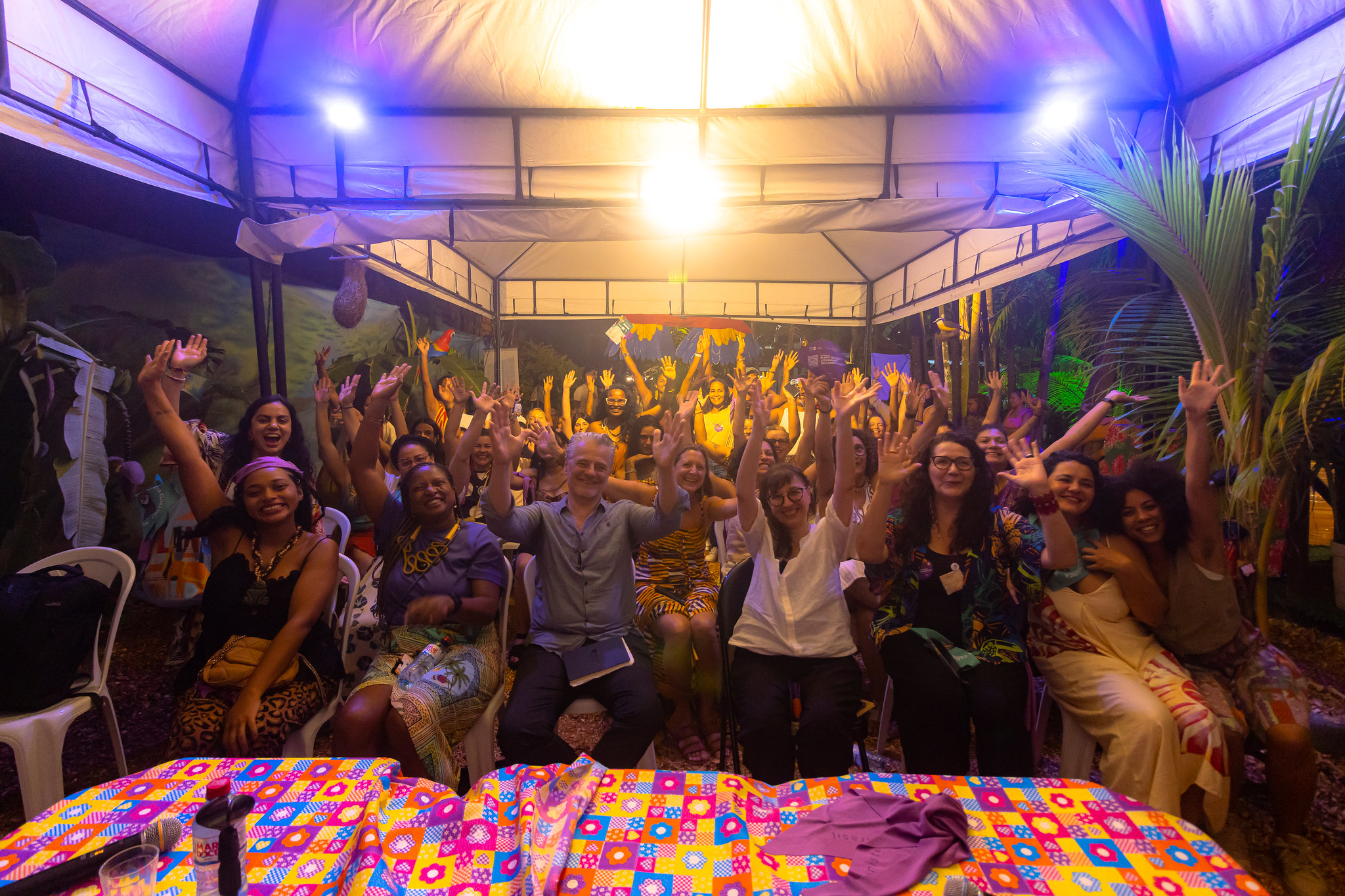
Belem marked an important turn: for the first time, the care economy is formally recognized at COP – through formal frameworks and agreements on just transition. While gaps remain in adaptation and finance, this provides a significant foundation to build on, to mainstream care in climate policy, finance, and adaptation planning.
Looking ahead
In a difficult context, 2025 has reinforced the growing recognition of care as a global policy priority. From FfD4 to COP to the G20, we have seen important signals in language, but also in commitments. In a context of growing backlash, collaboration and movement building becomes even more important. This year has been one of connection: connecting agendas, movements, policymaking spaces, and evidence to influence the global decisions that shape the daily realities of care.
As we move into 2026, in a political and economic climate which remains uncertain, sustained collaboration will be essential to both protect the advances we’ve witnessed this year, and build on them towards transformative action, ensuring that financing for care is not an afterthought, but a sustained investment in the societies we and future generations need.
Resources:
A Feminist Proposal for Financing Care (Full Report)
A Feminist Proposal for Financing Care (Executive Summary)
Centering Care in Climate Finance: A Feminist Blueprint for Adaptation, Resilience, and Climate Justice (ENG) (ESP) (POR)
Hacia sociedades del cuidado: prioridades para la agenda del G20
Building caring societies under the South African G20 Presidency and beyond (Care20 communique)