
Southern Voice will be hosting its landmark conference on the 24th and 25th of October 2023 in Nairobi, Kenya. It…
Southern Think Tanks’ Role in Global Policy Debates: Insights from the OTT 2026 Conference
By  2026-06-02T14:08:13+00:00June 1, 2026|
The On Think Tanks 2026 Conference, co-hosted by the Southern Voice member Policy Center for the New South, brought together a global community of think tanks and research institutions on May 19-21 in Rabat, Morocco. This year’s gathering focused on one key reflection: with eroding trust in institutions, global governance and the general social fabric, where do think tanks stand? And how can they remain credible and relevant actors in this context?
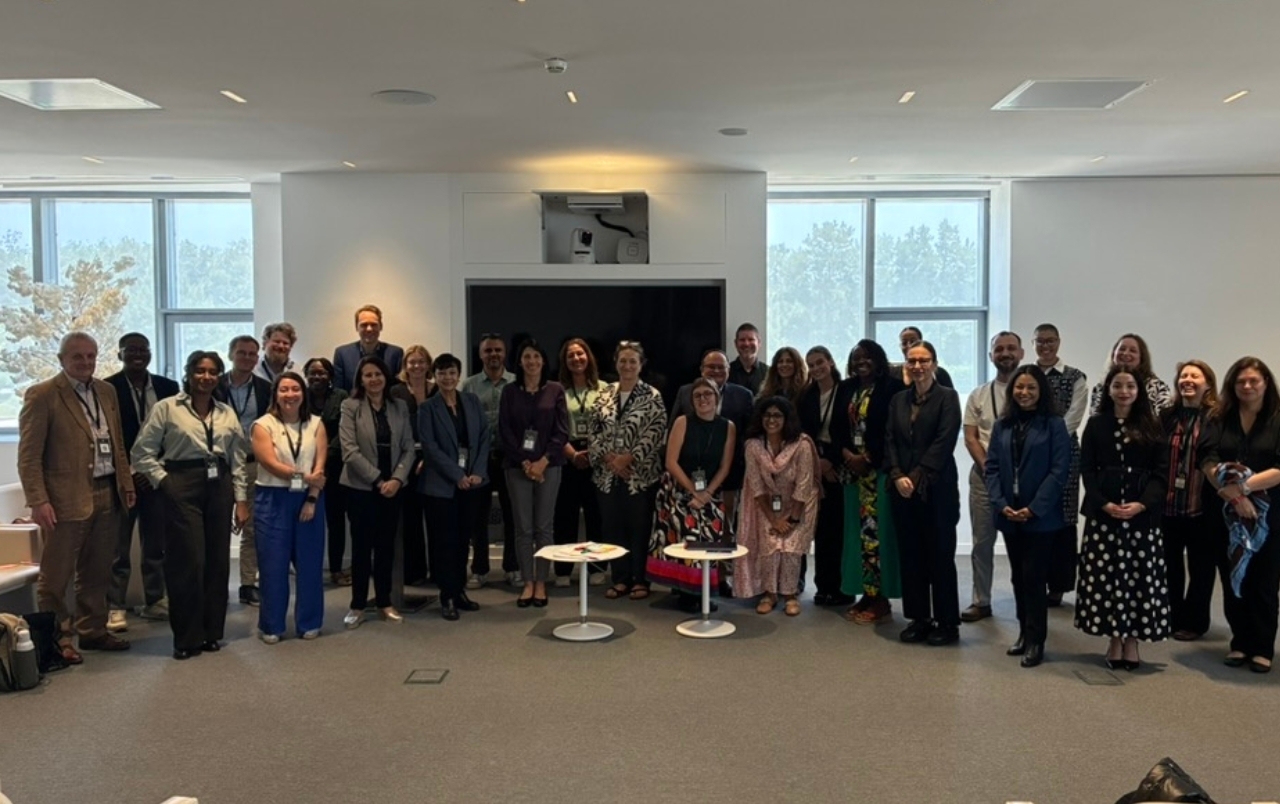
With 13 network members in attendance, Southern Voice leveraged the gathering to hold the session “Unlocking Global Impact for Southern Think Tanks.” The topic sits at the heart of our mission, and discussions tackled what it means for Global South think tanks to engage with global policy, and why this matters. In a room with more than 30 members, researchers, funders, and strategic partners, the session uncovered the value of Southern-to-global engagement, and the constraints that stand in the way. We agreed that for participation in global policy to be politically meaningful, barriers (financial, bureaucratic, among others) must fall. Strategic action – training institutional ambassadors, unlocking flexible funding, and cultivating a shared vision – is what will make global policy just, reliable, and trustworthy.
The session
Our shared diagnosis was multifaceted yet precise: despite the immeasurable value of Global South voices influencing global policy, this contribution is hindered by logistical and practical constraints, a manifestation of historical and deeply rooted asymmetries. In discussing the value of engagement, our network highlighted normative, justice-oriented factors such as equity and representation. Pragmatic reasons include more effective global policy formulation, truly reflecting the local priorities of the national policies they influence. Participants shared the consensus that Southern think tanks need to shift from being objects of analysis to producers of ideas in global policy debates.
Reflecting on the current barriers to engaging in global policy debates, we identified key issues, including:
- Funding constraints leave little room to dedicate resources to global policy work;
- Visa restrictions and similar bureaucracies present another layer of difficulty for in-person engagement;
- Lack of coordination platforms and of regular convening opportunities makes the global policy effort fragmented;
- General barrier of visibility: Southern think tanks are not frequently invited to the spaces where the decisions that affect them are taken.
Limiting local realities add another element to this picture: institutional precarity, weak infrastructure, conflict, and political insecurity may impact even the most committed institutions, and at times precede funding or logistical constraints.
Looking ahead
Session attendees specified key areas with strong opportunities for change towards a more globally engaged Southern think tank community. Crucial to addressing these obstacles is the strengthening of Southern think tanks, and this must be done on multiple fronts.
For Southern think tanks themselves: Visibility is the starting point. This means investing in a stronger presence on digital platforms, and in engagements with international stakeholders. More than that, Southern think tanks need to put forward institutional ambassadors who can represent their perspectives, interests, and voices in global fora. Being seen opens the possibility of being heard. This allows for engagements in global policy to develop as an integral part of the institution’s broader work.
For funders and strategic partners: It is essential to open pathways for flexible funding. Financial and institutional flexibility will allow Southern think tanks to explore spaces and to champion representatives that minimise current barriers to engagement.
Conclusion
The takeaway was unanimous: there is clear, mutual value for Southern think tanks to engage in global policy debates. What they bring to these spaces is as significant as what they stand to gain from them. Still lacking are platforms, flexible resources, and strategic intermediaries willing to facilitate this engagement, to turn it into more structured and intentional.
Here lies an opportunity for Southern Voice and for the wider network. There is a chance to create conditions for members and for Southern think tanks to overcome such barriers. More specifically, the session highlighted Southern Voice’s role in fostering and emphasising a strong sense of shared mission. Spaces like this conference session are strategic encounters for members to exchange, to reflect collectively, and to align priorities and strategies, all while building networks of solidarity.
Meanwhile, Southern Voice remains committed to nurturing a community around this greater purpose, and to incorporating inputs from our members and partners in similar convenings, towards informing our strategy and future initiatives. With our network of 71 think tanks across 35 countries, we continue to engage with members through research, policy contributions, and advocacy. We create a space for collaboration and for institutional strengthening. With that, we are better equipped to address the asymmetries in global development.
This article has benefited from contributions by several network members. They include:
- Denis Foretia – Executive Chairman, Nkafu Policy Institute, Cameroon; and Southern Voice Steering Committee member
- Margarita Beneke de Sanfeliú – Director, Center for Research and Statistics, Fundación Salvadoreña para el Desarrollo Económico y Social (FUSADES), El Salvador; and Southern Voice Steering Committee member
- Nouzha Chekrouni – Senior Fellow, Policy Center for the New South, Morocco; and Southern Voice Steering Committee member.
- Gabriela Suarez Buitron – Executive Director, Grupo FARO, Ecuador
- Judith Arielle Bekima – Executive Director, The Okwelians, Cameroon
- Liliana Alvarado – Director General, Ethos Innovación en Políticas Públicas, Mexico
- Lobna Jeribi – President and Founder, Solidar Tunisie, Tunisia