
Join us for the launch of Global South Perspectives, a new publication by Southern Voice. This virtual event explores pressing…
Beyond the Old Tables: The Global South Is Redefining Global Development
By 
 2025-12-17T11:51:57+00:00December 15, 2025|
It has been a month and a half, yet we can still feel the energy, enthusiasm, and excitement of having our members together in one room and, with one purpose: to exchange knowledge, learn from one another, and to reimagine the future of global development.
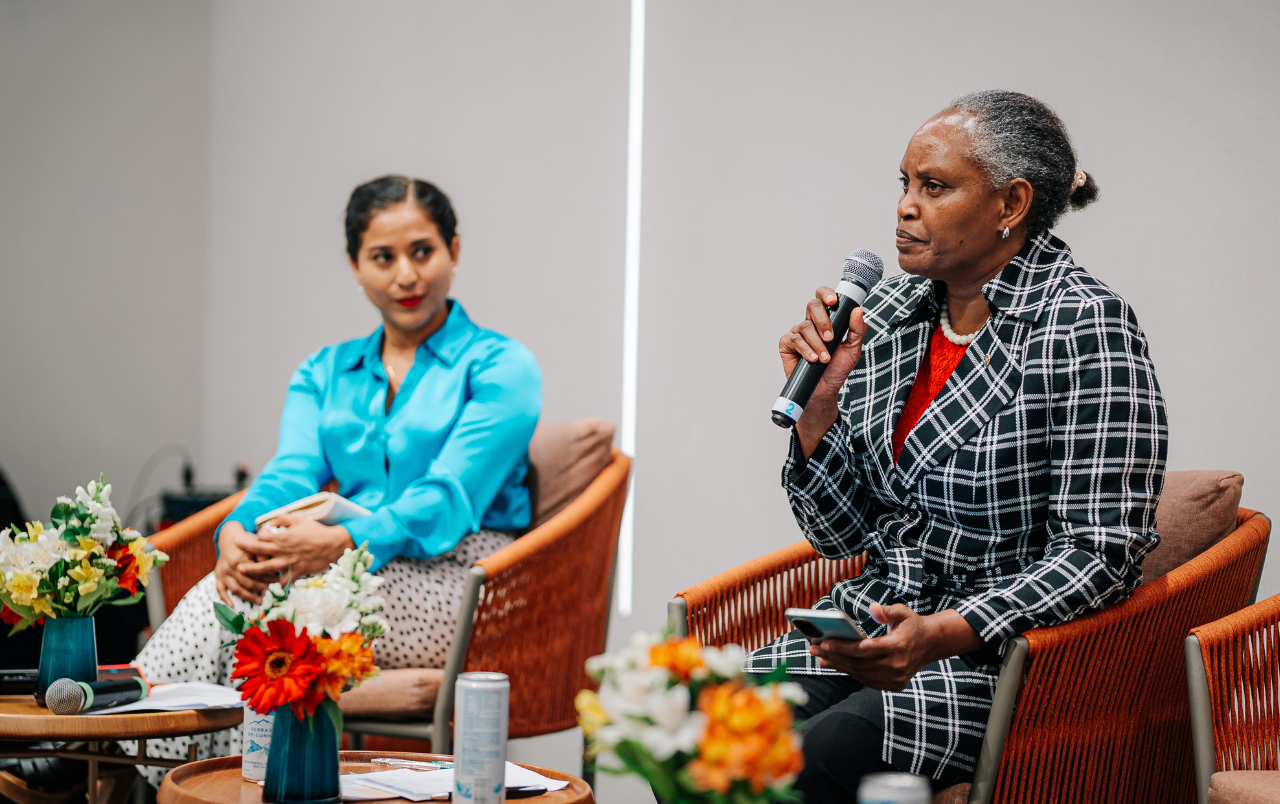
The city of São Paulo welcomed more than 100 thought leaders from 35 countries: researchers, economists, climate scientists, gender experts, security analysts, technologists, governance specialists, and development scholars from Africa, Asia, Latin America, and the Caribbean. For three days, this extraordinary community gathered to debate, challenge existing narratives, and rethink both our role and the development system we want to build together.
Three ideas crystallised why this moment matters, and why the voices of these leaders are indispensable for shaping the world ahead.
Rethinking the Centre: Transforming the Foundations of Global Development
First, if we are serious about transforming the global development system, our goal cannot be simply to rearrange seats on the existing tables. We must revolutionise how we think about, build, and conceptualise the system itself. This means not only widening participation in decision-making, but also reimagining the very architecture of global development. It requires a system designed and led by a truly collective set of actors, especially those most affected by today’s challenges. As one participant put it succinctly: “We need to rethink the centre itself.” Moreover, we need to redefine the rules of the game: the priorities and agendas must be locally-grounded, realistic, relevant, and feasible for the societies they aim to serve. Multilateral organisations face challenging times; to survive and remain legitimate, they must reinvent themselves in ways that are deeply inclusive, transparent, and open.
A Moment of Opportunity: Redefining Development from the Global South
Second, the geopolitical uncertainty that many view with caution may, in fact, offer the Global South a once-in-a-generation opportunity. We have a chance to redefine what development means and to set new standards for concepts such as well-being, prosperity, and growth—standards rooted in our histories, cultures, and lived realities. Crises often expose fractures, but they also open space for renewal. This is a moment for governments, academia, research institutions, and communities to act not as passive recipients of global decisions but as proactive shapers of the development agenda. The task ahead is to create the platforms (of dialogue, exchange, and collective imagination) in which this redefinition can take place. Think tanks can and in fact must play an important role here, and our members are ready for it.
The Power of Networks: Turning Connectivity into Influence
Third, knowledge networks such as Southern Voice can be powerful drivers of innovation and development. As the 2025 Nobel Prize in Economics awarded to Philippe Aghion, Peter Howitt, and Joel Mokyr reminds us, the true engines of progress lie not only in capital or technology, but in the capacity of societies to generate, share, and use knowledge. Progress is not just about invention, it is about the circulation of ideas and the networks that make such circulation possible. In a world marked by fragmentation, inequality, and declining trust, this insight resonates even more strongly. Real progress depends on the connections between people, ideas, and institutions.
Conclusion
The Southern Voice Conference was a compelling demonstration of this principle. It showed how knowledge networks create value by pooling insights, fostering mutual learning, and strengthening collective influence. This network, born in the Global South, reveals how thinkers and research institutions can transform connectivity into influence by bridging research, policy, and action across continents. Our experience shows that the most meaningful form of integration is not physical or digital, but intellectual: the ability to think together, trust one another, and to act collectively toward shared goals.
When knowledge networks function effectively, they do more than share information: they redistribute power. They connect those historically excluded from global knowledge production, enable diverse perspectives to meet on equal footing, and challenge the hierarchies that have long shaped who defines global priorities. Through these connections, they shift influence from the few to the many — and in doing so, they help rewire the very architecture of development cooperation.
We are confident that our members and partners returned from the conference not only inspired, but empowered. They carry with them a renewed sense of purpose and a shared commitment to turning ideas into action. The work that follows will be decisive. Together, we will continue strengthening Southern leadership, shaping global debates, and driving the transformation that the world’s development system urgently needs.
We invite you to read our Conference Joint Statement to learn more about our commitments and call to action, and our Conference Report for insights into the main themes and discussions, and to see an overview of who joined us in São Paulo.
If you are a professional looking for Global South experts, we invite you to explore our network database, and to connect with us at secretariat@southernvoice.org. Follow us on social media and subscribe to our newsletter to stay connected with the people, ideas, and evidence shaping the next chapter of global development.