
Africa's shift to green/renewable energy has been relatively sluggish compared to the global average. The slow adoption of green energy…
COP31: The Energy Transition Is Accelerating, but Can Finance Keep Up?
By  2026-11-16T15:06:56+00:00November 16, 2026|
From electrification and renewable energy to investment risks and financial reform, COP31 is bringing a fundamental question into focus: how can global climate ambitions become economically viable investments?
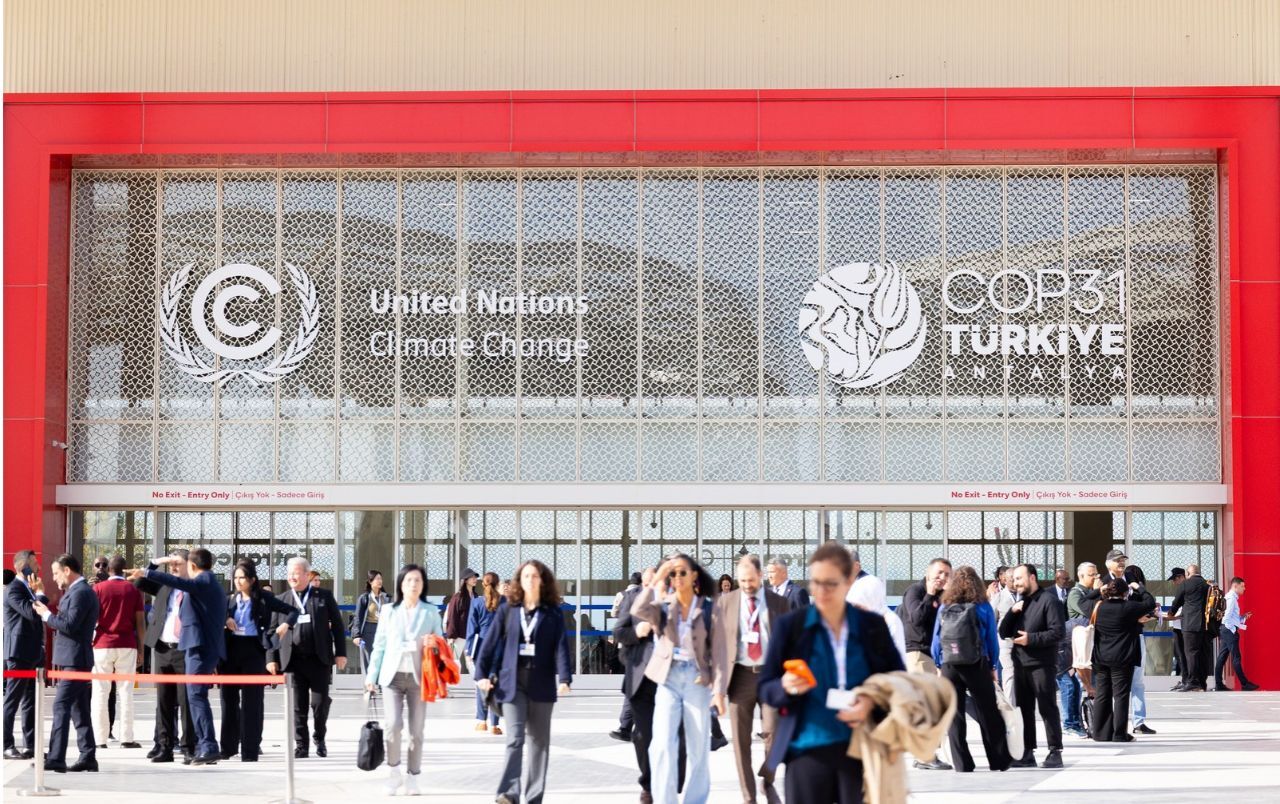
The first days of COP31 in Antalya, Turkey, reveal a shift in the global energy-transition debate. Attention is moving beyond renewable capacity and emissions targets toward the economic, technological and financial conditions needed to turn climate commitments into investments. Energy security, electrification, infrastructure and access to finance now sit at the centre of implementation.
The Age of Electricity: Ambition Meets Infrastructure
The 35-by-35 Global Electrification Pledge aims to raise electricity’s share of final energy consumption from approximately 23% today to 35% by 2035. Doing so requires electrifying transport, buildings and industry. Electrification can improve efficiency and reduce fossil-fuel exposure, but it does not automatically cut emissions: outcomes depend on the electricity mix and the power systems’ ability to meet additional demand.
The transition therefore cannot be measured only in installed renewable megawatts. Networks, storage, flexible generation and demand management determine whether new capacity can actually deliver power. Insights from case studies being developed as part of Southern Voice’s SVGD initiative illustrate this clearly: South Africa faces transmission and grid-access constraints, while Uruguay (whose electricity generation was approximately 98% renewable in 2025) must now address storage, flexibility and electrification of end uses. Clean electricity is a starting point, not the entire transition.
COP31 has also broadened the technology debate. A new geothermal initiative sets out a potential increase in global capacity from 15.6 GW in 2025 to 193 GW by 2050, underscoring the value of firm renewable generation alongside solar and wind. Such targets remain ambitions rather than financed capacity.
Climate Finance: From Pledges to Projects
The Baku-to-Belém Roadmap seeks to mobilise at least US$1.3 trillion annually in climate finance for developing countries by 2035. Its November 2026 assessment suggests roughly US$460 billion under current trajectories, compared with US$1.27–1.41 trillion under coordinated interventions. The gulf is substantial, but the critical distinction is between announcing finance and converting it into operating investments.
Early COP31 announcements illustrate emerging mechanisms. The Global Clean Power Alliance is supporting regulatory reform, investment planning and project preparation; the Green Climate Fund and Sweden’s Sida announced cooperation on guarantees to attract commercial capital. Concessional finance and guarantees can reduce selected risks and improve bankability. They cannot, however, indefinitely substitute for sound contracts, solvent counterparties, credible tariffs, or macroeconomic stability—and private finance cannot replace grants where repayment capacity is limited.
The SVGD initiative highlights an important analytical distinction: finance availability is not the same as finance usability. Evidence from Uruguay demonstrates the importance of credible long-term power-purchase agreements and policy continuity; Morocco illustrates difficulties in tracing commitments to individual projects. Across countries, a project can be unprepared, unapproved, unfunded, unbuilt or unable to connect to the grid. Each bottleneck requires a different solution.
Three Questions That Will Define the Transition
First, are governments investing in whole energy systems, or merely in technologies? New wind and solar plants without transmission and flexibility can underdeliver. Second, can climate finance bridge the distance between technically attractive projects and bankable investments? Currency exposure, revenue certainty and institutions matter as much as headline funding. Third, how can the transition away from fossil fuels remain economically and socially viable across diverse national circumstances?
There is no universal blueprint. For example, Nepal’s hydropower-dominated electricity supply still faces seasonality and end-use decarbonisation challenges; Indonesia must confront coal-intensive industry and captive generation. Effective global finance must respond to these different constraints rather than impose a single technology or institutional model.
From Climate Commitments to Measurable Results
The practical priorities are clear: electrify final demand, decarbonise supply, strengthen networks, reduce investment risks and align institutions with long-term goals. Yet the metrics must evolve as well. In addition to renewable capacity and dollars pledged, governments should report financial close, disbursement, commissioning, time to grid connection, service reliability, emissions reductions and social outcomes. Accountability means identifying who can correct implementation failures, and whether corrections occur.
The central lesson emerging from COP31 is that the energy transition is not only a technological challenge: it is a challenge of economic transformation, institutional coordination and financial architecture. Its success should ultimately be judged by how effectively commitments and finance become operational, reliable and lower-emission energy systems—not by the volume of announcements alone.