
The SDG financing gap has surged to $4 trillion annually, posing urgent challenges for the Global South. Ahead of the…
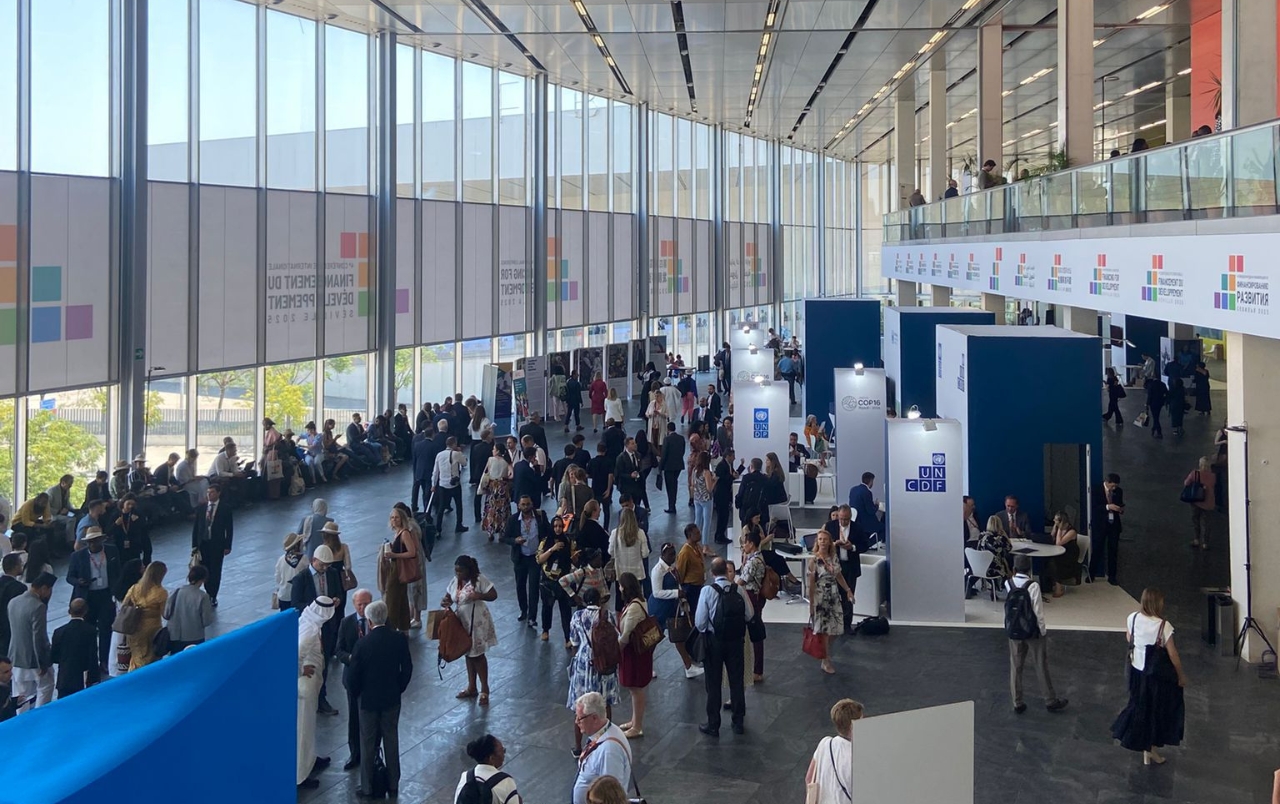
Reflections from the FfD4 Conference: Towards a Fairer Financing Landscape
By  2025-07-23T13:18:54+00:00July 23, 2025|
From June 30 to July 3, I participated in the Fourth International Conference on Financing for Development (FfD4) in Seville, Spain. This moment could not have been more critical. With the 2030 Agenda entering its final stretch, and amid intersecting global crises—from geopolitical tensions to climate disruption and mounting debt burdens—this conference offered a unique opportunity to reshape the global financing architecture.
In this reflection, I offer three perspectives:
-
-
- The importance of the conference for Southern leadership.
- Key takeaways from the conference, and
- Southern Voice’s positioning and call to action.
-
Why This Conference Mattered for Southern Leadership
FfD conferences take place approximately once a decade, with Monterrey (2002), Doha (2008), and Addis Ababa (2015) preceding this fourth edition. But this year’s meeting took place in a radically different landscape—one marked by intensifying global inequality, ODA reductions, climate urgency, and multilateral overload.
For the Global South, the Seville moment was about more than technical financing discussions. It was a chance to reassert leadership, challenge outdated models, and push for a development agenda that centres equity, resilience, and local agency. Southern governments, institutions, and networks came ready—not just with critiques, but with concrete proposals and collective demands.
Key Takeaways: Cautious Optimism and the Hard Work Ahead
The conference’s main outcome was the Seville Commitment, adopted by consensus. While its tone was broadly supportive of inclusive financing and systemic reform, many Southern delegates voiced concern over its vague language and lack of concrete mechanisms for implementation. The optimism was cautious—and understandably so.
Still, meaningful signs of Southern leadership emerged. For example:
-
-
- Zambia and Nepal, as co-chairs of the conference, demonstrated proactive leadership, with Zambia announcing a new Borrower’s Database to improve debt transparency.
- Cross-regional dialogue highlighted shared priorities: tax justice, debt restructuring, women’s leadership, and climate-aligned financing.
-
However, the overall atmosphere was marked by the shared need to define collective and harmonised action. Despite some dynamic exchanges, progress on actionable outcomes remained limited. There was a lot of talk—but few concrete shifts.
Southern Voice Positioning: From Critique to Constructive Agenda-Setting
At FfD4 in Seville, Southern Voice came with a clear and deliberate purpose: to ensure that knowledge, priorities, and leadership from the Global South were not only present but influential in shaping the future of global financing. Our delegation brought together member think tanks from across Africa, Asia, and Latin America—including AERC, CDP, INESAD, CIPPEC, CIPÒ, IPEA, and Asuntos del Sur—each contributing grounded perspectives from their national and regional contexts. United by a shared vision, we advocated for a financing system that responds to the realities of the South and supports inclusive, just, and sustainable development.
We believe that achieving this requires bold but necessary shifts. In how we think: moving toward a global development architecture that recognises the leadership and agency of Southern actors—not as beneficiaries, but as co-creators of solutions. And in how we act: by replacing fragmentation with coordination, moving from competition to cooperation, and transforming extractive models into meaningful and equitable partnerships.
Southern Voice is uniquely positioned to help shape this transition. With a network of 71 think tanks across 35 countries, we harness collective intelligence to build global bargaining power. We bridge the persistent gap between evidence and action by investing in relationships and connecting local research with global policy spaces. And we advocate for systemic change—working to ensure that research partnerships are fair, that Southern research institutions are resilient, and that global agendas are shaped by those closest to the challenges they aim to address.
Our Collective Call: A Roadmap for Action
To support this vision, Southern Voice presented a bold and practical Joint Statement, grounded in the lived realities of our members and structured around four urgent priorities. First, we called for optimising the use of available resources through better coordination, transparency, and civil society engagement. Second, we urged decisive action to lift countries out of debt distress, including fairer restructuring mechanisms and strengthened national capacities. Third, we advocated for equitable domestic resource mobilisation—such as progressive taxation and modernised fiscal systems. Finally, we pushed for fair and inclusive climate financing, including increased grants for locally led adaptation and stronger Global South leadership in climate finance governance. This is our call for a more just and sustainable global financing system. Read the full Joint Statement here.
Final Reflections
The road ahead is long, but FfD4 reaffirmed that Southern voices are no longer on the sidelines. The Global South is not just reacting, it is building alternatives. And networks like Southern Voice are critical to connecting knowledge, policy, and action at every level. We are ready to continue the work—collectively, creatively, and with determination.
Additional references from our members: