
Southern Voice Joins Global Policy Dialogue on Post-COP30 Climate Implementation
By  2026-06-10T01:24:27+00:00June 10, 2026|
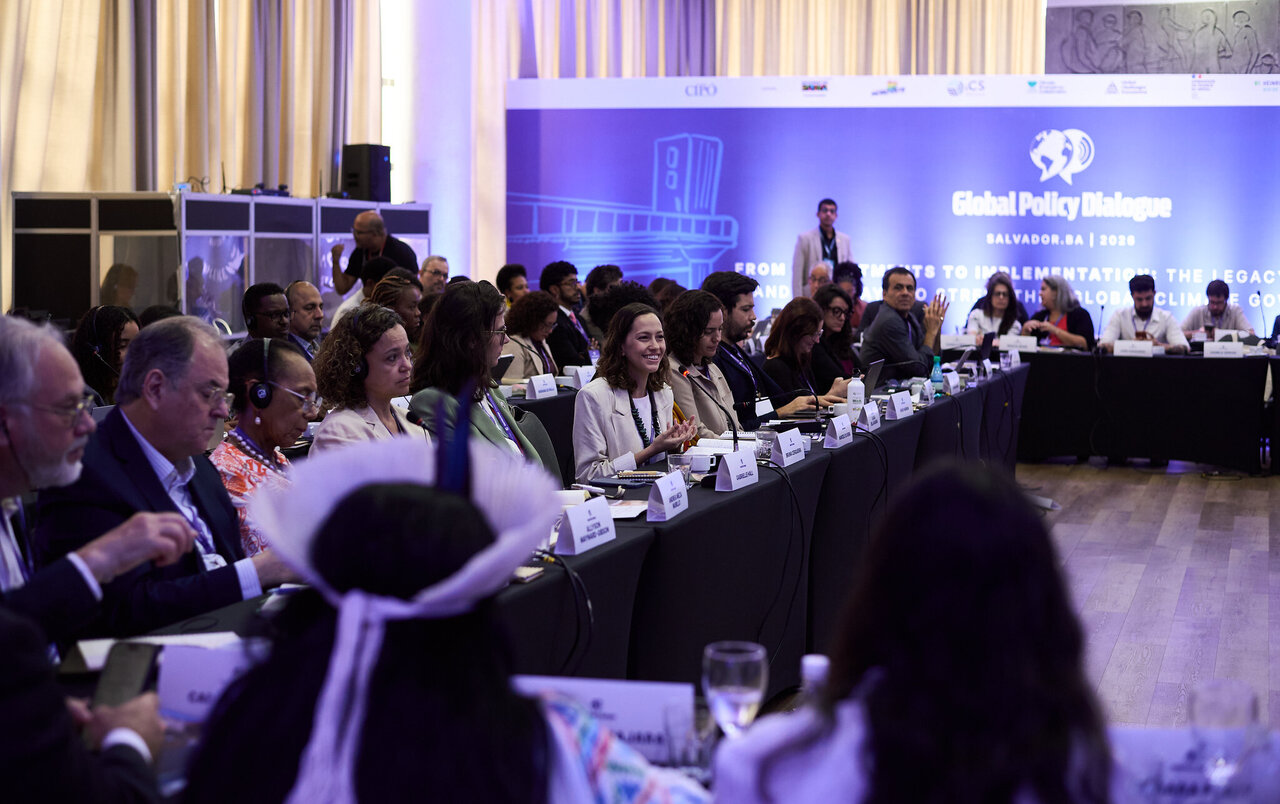
Plataforma CIPÓ, a Southern Voice member, concluded the 2026 Global Policy Dialogue on May 26th in Salvador, Bahia, after two days of discussions on the future of global climate governance after COP30. Held under the theme “From Commitments to Implementation,” this edition of the yearly Dialogue brought together representatives from more than 20 countries, the COP30 Presidency, Brazilian authorities, international organizations, academia, civil society and Global South policy networks.
Southern Voice participated through Javier Aliaga Lordemann (INESAD, Bolivia), a member of Southern Voice’s climate committee, bringing a Global South perspective to the central post-Belém challenge: how to turn climate commitments into implementation that is legitimate, equitable, locally grounded and accountable.
Discussions focused on COP30’s legacy and the emergence of a two-tier model of climate multilateralism: one tier based on formal United Nations Framework Convention on Climate Change (UNFCCC) decisions that provide legitimacy and direction, and a second tier focused on implementation through coalitions, roadmaps, finance platforms, technical partnerships, non-state actors and territorial initiatives. Participants stressed that this second tier must strengthen, not bypass, the multilateral system, and must ensure transparency, accountability and meaningful Global South participation.
The Dialogue addressed climate finance, adaptation, trade and climate, deforestation, just energy transitions and the institutional innovations launched or strengthened during COP30. A recurring message was that implementation must remain politically active after Belém. COP30 helped shift the debate from new pledges toward delivery, but its legacy will depend on whether roadmaps, action agendas and accelerators become financed, measurable and locally owned implementation plans.
Participants also discussed the Belém–Santa Marta connection. While fossil fuels remained difficult to address through formal consensus in Belém, the Santa Marta process on transitioning away from fossil fuels showed how coalition-based approaches can advance practical discussions on reducing fossil fuel dependence, mobilizing finance, supporting affected workers and territories, and building credible national pathways away from coal, oil and gas.
Roadmaps were framed as implementation tools rather than symbolic declarations. Fossil fuel, deforestation and finance roadmaps must clarify sequencing, investment needs, social protection, labour transition, territorial governance, Indigenous and local knowledge, predictable finance, concessionality, debt, cost of capital and direct access for local and subnational actors.
The Global Stocktake was discussed as the Paris Agreement’s key diagnostic mechanism, showing that current action remains insufficient to keep 1.5°C within reach and to provide the political basis for a just, orderly and equitable transition away from fossil fuels. The challenge after COP30 is to translate this diagnosis into national plans, investment pipelines, adaptation strategies, just transition frameworks and accountability mechanisms.
The Dialogue also considered the Global Implementation Accelerator, launched in the COP30 context as a voluntary mechanism to support countries in implementing national climate commitments and adaptation plans. Expected to serve as a prototype for a more structured implementation layer in global climate governance, the Accelerator should support implementation that is country-owned, locally grounded, finance-ready, socially legitimate and transparently monitored.
Southern Voice’s Global South Climate Change Agenda speaks directly to these debates through several priorities: strengthening local action and governance; integrating climate policy with development, economic transformation, energy transition, food security, health and livelihoods; and advancing fairer international cooperation. For Southern Voice, climate implementation will not succeed if it remains externally driven, fragmented or disconnected from communities and subnational institutions.
The core message from the Dialogue is clear: the future of climate multilateralism will depend on whether the emerging two-tier architecture can convert the Global Stocktake, roadmaps, action agendas and accelerators into implementation plans that are financed, measurable, territorially grounded and accountable — and whether countries and communities in the Global South have the resources, voice and institutional capacity to implement them.