
Skip to content
  • OUR WORK
    • Articles
    • Publications
    • Initiatives
      • State of the SDGs
      • Global South Perspectives
      • Equity in Research for Development
      • Ed-tech
      • Young Think Tankers
      • Digital Transformation
      • Our Common Agenda
      • Peace & Inclusive Institutions
      • Rethinking Development Effectiveness
      • Covid-19
    • Conference
      • São Paulo 2025
      • Nairobi 2023
    • News
    • Events
  • ABOUT
    • About Southern Voice
    • What we do
    • Regions
      • Global
      • Africa
      • Asia
      • Latin America & Caribbean
    • Network Members
    • How to join
    • Steering Committee
    • Secretariat
  • SUBSCRIBE

RELATED POSTS

  • Childhood during the pandemic: what will today's offspring remember as adults?

    The relevance of living in an adequate socio-spatial environment became even more visible with the pandemic.
  • Schooling during the Pandemic: The Indian Experience

    This article captures the experience of children attending online classes in India during the lockdown. The data stems from an…

  • National Level Implications of Implementing SDGs in Paraguay

  • View Larger Image

The Role of Rural Women During the Pandemic in Paraguay

By
Diana García
2022-12-20T13:56:32+00:00November 28, 2022|
  • ENGLISH

  • ESPAÑOL

  • ENGLISH

We aimed to learn more about the experiences of women who depend on food assistance and worked on family farms during and after the pandemic in Paraguay. To achieve that, we conducted a qualitative study with 22 farmers’ organizations and five female leaders from those institutions.
The mapping revealed the fundamental contribution of family farming and agroecology to the food security of the country’s population (Sustainable Development Goals 2 and 13). It also exposed the lasting limitations brought upon them by poverty (SDG 1) and unequal access to public services (SDG 10).

Faced with the loss or temporary lack of jobs in the cities, many Paraguayans returned to their farms. Families and farmers’ organizations sustained food, housing, and healthcare demand.

Family farming

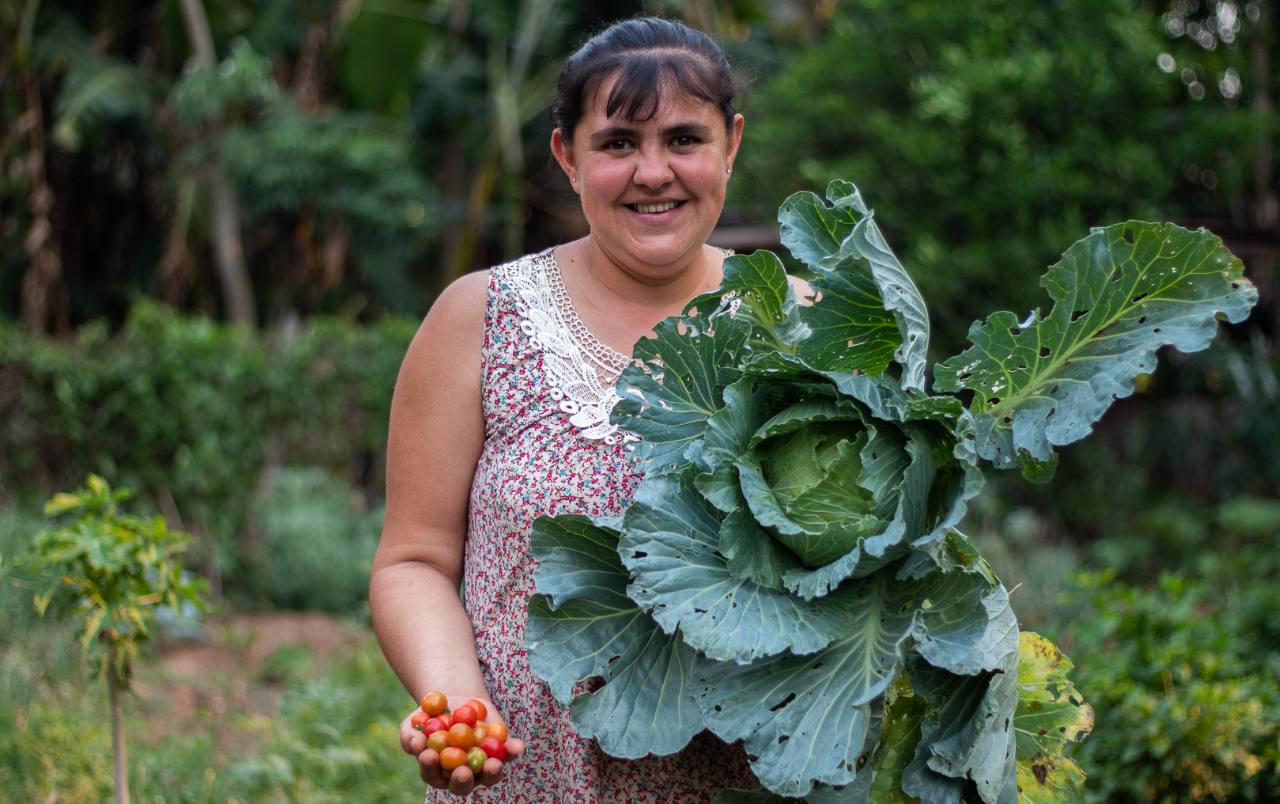
The work of those returning members increased the production capacity of the agroecological family farms and community gardens. They provided food for the family and, in many cases, produced surpluses for merchandising. Despite the curfews imposed by the pandemic, goods produced by families and community gardens led by female farmers still had trade channels. They used local fairs and public canteens in urban areas. Thus, the “survival mode” expressed by these female leaders in food security was surprisingly evident through the increase in self-sufficiency and commerce in vulnerable sectors with zero food production capacity.

Before the pandemic, poverty reached 25% of the population in Paraguay. During the crisis, it affected almost a third of the country. Today, over 60% of the rural sector lives in poverty.

The role of women

Rural women suffer the most from destitution. They’re responsible for food production and for taking care of the household. Women also channel the most critical demands within farmers’ associations. It is especially the case for healthcare, education, access to land, and housing. The pandemic has aggravated rural poverty. Contributions and remittances to family members working outside and inside the country ceased, and the costs of access to healthcare and education increased.

According to the women interviewed, the deterioration of healthcare and education services during the pandemic led to increased poverty. In health, primary care was sidelined from the moment COVID-19 treatments became the main priority. In education, school closures and the transition to online instruction also caused significant harm to students from rural areas.

The impact of the pandemic

The lack of income in rural households prevented the provision of technological tools for virtual education. It led to school dropouts, especially among rural girls and showed the inequality in access to education during the pandemic. Another factor pointed out by rural women is that the pandemic has deepened gender inequalities. The interviews show that domestic violence, femicide, and teenage pregnancy have significantly increased. The fact that men were forced to stay at home due to the pandemic led to increased assaults on women, mainly girls and adolescents.

The interviewed female leaders propose post-pandemic public policies in support of:

  • agricultural diversification, self-sufficiency, agroecology, and merchandising channels for vegetable garden foods.
  • the provision of communication technologies for rural areas so the education system doesn’t segregate or encourage school dropouts.
  • measures to protect women in situations of gender-based violence.
  • ending repressive laws aimed at criminalizing farmer struggles for the right of access to land.

This article is a summary of the work “Rural women during the pandemic“, prepared by Diana García for CADEP.

  • ESPAÑOL

El rol de las mujeres rurales en pandemia en Paraguay

por Diana García

A fin de conocer las experiencias de mujeres en la agricultura familiar y la asistencia alimentaria durante la pandemia y postpandemia en Paraguay, se llevó adelante un estudio cualitativo con 22 organizaciones campesinas y 5 mujeres líderes de esas organizaciones.

El mapeo realizado develó la importante contribución de la agricultura familiar y la agroecología a la seguridad alimentaria de los habitantes del país (Objetivo de Desarrollo Sostenible 2 y 13), al mismo tiempo de demostrar las limitaciones persistentes en materia de pobreza (ODS 1), y en acceso desigual a los servicios públicos (ODS 10).

Ante la pérdida o cese temporal de los trabajos en las zonas urbanas, muchos paraguayos y paraguayas retornaron a los hogares campesinos. Las demandas de alimentos, vivienda y salud fueron sostenidas desde las familias y organizaciones campesinas.

Agricultura familiar

Las fincas familiares campesinas y huertas comunitarias, de base agroecológica se vieron incrementadas en su capacidad productiva debido al trabajo de los miembros que retornaron. Dicha situación, no solo aprovisionó de alimentos a la familia, sino también en muchos casos, se produjo excedentes para la comercialización.

A pesar de las restricciones de circulación impuestas por la pandemia, la producción de las huertas familiares como comunitarias dirigidas por mujeres campesinas, pudieron tener canales de comercialización en ferias locales y a ollas y comedores populares de zonas urbanas.

Así el “lograr sobrevivir” expresado por estas mujeres líderes en relación a la seguridad alimentaria ha tenido su manifestación en el aumento del autoconsumo y en el aumento de la comercialización hacia sectores vulnerables sin capacidad de producción alimentaria.

En Paraguay, la pobreza, antes de la pandemia, alcanzaba a un 25 % de la población.  Durante la pandemia llegó a afectar a casi un tercio de la población. La pobreza se concentra en el sector rural en más de un 60%.

El papel de las mujeres

Las mujeres rurales, en particular, son las que más sufren la pobreza. Sobre ellas recae el cuidado del hogar, además de la producción alimentaria. Son las mujeres, además, las canalizadoras de las principales demandas sobre todo de salud, educación, acceso a la tierra y vivienda en las organizaciones campesinas.

La pandemia ha agravado esta situación de pobreza rural debido al cese de los aportes y remesas de miembros de los hogares con trabajos fuera y dentro del país y el aumento de gastos en salud y educación.

Durante la pandemia, el deterioro de las condiciones de servicios de salud y educación también ha contribuido al incremento de la pobreza, según las mujeres entrevistadas. En salud, desde el momento en que la atención básica se dejó de lado por la preferencia otorgada a hacer frente al COVID-19. En materia de educación, porque el cierre de aulas y la modalidad de la enseñanza virtual produjo daños mayores al sector rural.

El impacto de la pandemia

La falta de ingresos de los hogares rurales impidió proveerse de herramientas tecnológicas para la educación virtual, produciendo el abandono escolar, principalmente de las niñas rurales. Esta es una clara demostración de la desigualdad en el acceso a la educación en pandemia.

Otro factor señalado por las mujeres campesinas es que la pandemia ha profundizado las desigualdades de género en el sector rural. La violencia intrafamiliar, el feminicidio, así como el embarazo adolescente han aumentado según lo expresado en las entrevistas. El hecho que los varones se vieron obligados a permanecer en el hogar, por efecto de la pandemia, permitió el aumento de las agresiones a las mujeres, principalmente niñas y adolescentes.

Las mujeres líderes entrevistadas proponen políticas públicas post pandemia de apoyo a:

  • la diversificación agrícola, el autoconsumo, la agroecología y canales de comercialización de alimentos de la huerta.
  • la provisión de tecnologías de comunicación a los sectores rurales para una educación que no sea excluyente ni que promueva el abandono escolar.
  • Políticas de protección de mujeres en situaciones de violencia de género.
  • La supresión de leyes represivas que se orientan a criminalizar las luchas campesinas en cuanto a derecho de acceso a tierras.

Este artículo es un resumen del trabajo “Mujeres rurales en pandemia“, elaborado por Diana García para el CADEP.

 

RELATED POSTS

  • Childhood during the pandemic: what will today's offspring remember as adults?

    The relevance of living in an adequate socio-spatial environment became even more visible with the pandemic.

  • Schooling during the Pandemic: The Indian Experience

    This article captures the experience of children attending online classes in India during the lockdown. The data stems from an…

  • National Level Implications of Implementing SDGs in Paraguay

Share this Story

FacebookTwitterLinkedIn

RELATED POSTS

  • Childhood during the pandemic: what will today's offspring remember as adults?

    The relevance of living in an adequate socio-spatial environment became even more visible with the pandemic.

  • Schooling during the Pandemic: The Indian Experience

    This article captures the experience of children attending online classes in India during the lockdown. The data stems from an…

  • National Level Implications of Implementing SDGs in Paraguay


Careers

Contact Us

info@southernvoice.org | Privacy Policy

Southern perspectives.

Global debates.

RELATED POSTS

  • Childhood during the pandemic: what will today's offspring remember as adults?

    The relevance of living in an adequate socio-spatial environment became even more visible with the pandemic.

  • Schooling during the Pandemic: The Indian Experience

    This article captures the experience of children attending online classes in India during the lockdown. The data stems from an…

  • National Level Implications of Implementing SDGs in Paraguay

Page load link
Southern Voice Logo

Gender-Inclusive Disaster Risk Management in Mexico

Mexico is highly exposed to natural hazards such as earthquakes, hurricanes, and extreme rainfall, with climate change further intensifying these risks. Disasters often have unequal impacts, with women, girls, indigenous and the LGBTQI+ population  facing heightened vulnerability due to structural inequalities, limited access to economic opportunities, exposure to violence, and the disproportionate burden of caregiving responsibilities. Despite evidence of these differentiated effects, there is still a lack of comprehensive data to fully capture their scope and duration. At the same time, Mexico is at a pivotal moment with the current administration prioritising gender equality and the National Centre for Disaster Prevention (CENAPRED) preparing its first National Strategy for Integrated Disaster Risk Management (ENGIRD). This creates a unique opportunity to embed gender and intersectional perspectives into disaster policy and practice.

ETHOS’ efforts are geared toward strengthening women’s resilience to disasters in Mexico, particularly hurricanes, through the mainstreaming of gender in the ENGIRD. This will enable women to better prevent, respond to, and recover from disasters. The project assesses the distinct impacts of disasters on women, adolescents, and girls, with a focus on hurricanes affecting Acapulco, Guerrero. It also equips decision-makers with practical recommendations, drawing on evidence gathered through in-depth interviews and surveys. Ultimately, the project seeks to generate gender-disaggregated data on disaster impacts to inform specific action lines within the ENGIRD, and to guide future policy development.

For more information, please visit:

https://www.ethos.org.mx/inclusion/publicaciones/evidence_to_integrate_gender_perspective_in_disaster_risk_management_in_mexico

https://www.ethos.org.mx/inclusion/publicaciones/evidence_for_integrating_the_gender_perspective_into_comprehensive_disaster_risk_management_in_mexico

https://www.ethos.org.mx/inclusion/columnas/disaster_management_with_a_gender_perspective_a_historic_debt

Assessing Care Work Skills in Peru, Ecuador and Uruguay

In Latin America, caregiving has long been undervalued, with women carrying most of the responsibility both within households and in paid care roles. Despite the sector’s scale, working conditions are often poor, and opportunities for professional growth remain limited. Regional care agendas have therefore prioritised reducing the burden on women, redistributing caregiving tasks, and revaluing care work by transforming it into dignified, well-paid employment. Within this framework, Early Childhood Education and Care (ECEC) programmes are particularly important, as they shape children’s development while relying heavily on women caregivers. Strengthening certification systems in this workforce offers a pathway to increased recognition, professionalisation, and improved quality of care.

For this project, the Grupo de Análisis para el Desarrollo (GRADE – Perú) and the Fundación para el Avance de las Reformas y Oportunidades (FARO – Ecuador) teams are working to enhance recognition of female caregivers’ critical roles, improve their working conditions, and expand certification programmes to create pathways to decent employment and career growth. The project contributes to regional knowledge by providing evidence on caregivers’ perspectives regarding the value of certification for their employment and well-being. It also offers a comparative analysis across Peru, Uruguay, and Ecuador, examining the characteristics, achievements, and obstacles of skill certification processes in ECEC programmes. By engaging stakeholders and disseminating findings across these countries, the project embeds a gender-sensitive approach into certification, aiming not only to improve care quality, but also to support women’s educational and professional trajectories.

Project video: https://drive.google.com/file/d/1fuSEpdHRnUVo3DTaNN6fGR4-59Q_bF3t/view?usp=sharing

Synthesising Evidence for Women’s Entrepreneurship in Senegal

Across Senegal, women entrepreneurs play a vital role in driving innovation, creating jobs, and supporting communities. Yet, their potential remains constrained by systemic barriers that make it harder to start and grow businesses. 

Challenges such as limited access to finance, markets, and professional networks, alongside entrenched social norms, continue to limit opportunities. Recognising this, the Government of Senegal has placed women’s entrepreneurship firmly on the national development agenda, seeking to strengthen existing support systems and craft more responsive policies. Initiative Prospective Agricole et Rural (IPAR – Senegal)’s efforts are geared towards strengthening the economic empowerment of women entrepreneurs in agriculture and other sectors in Senegal, through the implementation of supportive public policies informed by data. IPAR researchers have been working to understand with precision 1) the profile of women entrepreneurs in Senegal, particularly in agriculture, and 2) the systemic barriers they face, and their needs in terms of entrepreneurial development (such as financing, training, access to markets etc). Collaborating closely with the relevant government stakeholders, the team aims to inform the implementation of the country’s strategy in favour of entrepreneurship.

Creating Care Solutions for Women’s Economic Growth in Guinea-Bissau

In rural Guinea-Bissau, women play a central role in both household responsibilities and agricultural labour, particularly in the cashew sector, which drives the national economy. Yet, their productivity and economic empowerment are constrained by the heavy burden of unpaid care work and by the scarcity of childcare services. During harvest seasons, women often bring young children to the fields, affecting both their work and their children’s safety. This project explores an innovative childcare model tailored to rural realities, and designed to free women’s time, support their livelihoods, and strengthen early childhood development. By linking gender equity with economic productivity, the initiative aims to generate lasting benefits for both families and communities.

The Bissau Economics Lab (BELAB) team is working to reduce the time women in rural Guinea-Bissau spend on unpaid care work, while increasing their economic productivity and income. By expanding and improving childcare provision, the project also aims to strengthen children’s health and cognitive development. To this end, the team is piloting an extended preschool day to assess its effects on children’s attendance, women’s time use, mental health, and employment. They are also testing implementation strategies and identifying factors that enable or hinder effective early childhood development programmes. Ultimately, the project contributes to global knowledge on rethinking childcare in low-resource rural areas, particularly where agricultural demands shape daily life.

Designing Curriculum Pathways for Indonesian Girls in STEM

Science, technology, engineering and mathematics (STEM) education is essential for nurturing future-ready talent and opportunities in a digital and technology-driven economic landscape. It is a cornerstone of the country’s “Golden Indonesia” vision to build strong human resources and foster innovation to drive sustainable development. However, persistent gender disparities remain. While many women pursue higher education, they are less likely to choose STEM fields or continue into STEM careers. 

This gap is shaped by a combination of factors, including cultural expectations, limited early exposure to STEM subjects, and the perception that these fields are traditionally male-dominated. Schools play a crucial role in shifting this narrative and encourage more girls to pursue and excel in STEM-related subjects. 

This project seeks to advance gender equity in STEM education in Indonesia. Center for Indonesian Policy Studies (CIPS) researchers are working with secondary school leaders to encourage female student interests and achievements in STEM subjects in order to increase more women to join STEM fields at the higher education level; while also contributing to the existing body of knowledge on gender equity within the country.

By engaging with local governments, school teachers, and consulting gender experts, the team aims to uncover the root causes of underrepresentation, map and identify barriers to entry, and develop practical teaching guidelines for gender-sensitive educational instruction in secondary school classrooms. The project envisions a future where teachers actively integrate gender-responsive learning principles into their classroom materials, and government staff at all levels prioritise and support schools in adopting gender-sensitive approaches that foster more girls and women enter into STEM fields.

Advancing Gender-Equitable Politics in Pakistan

Politics in Pakistan has long been considered a male-dominated sphere, despite women comprising nearly half of the population. Globally, women hold only about a quarter of political positions, and in Pakistan, their representation within party decision-making structures is even more limited.

While quotas have helped increase the number of women in parliament, their voices within party leadership remain minimal. Women’s divisions within parties are often inactive and guided by male-dominated agendas, leaving women sidelined from the very spaces where key decisions are made. Addressing this political inequality, which sits at the root of many other gender gaps, is therefore critical.

This Sustainable Development Policy Institute (SDPI) project aims to foster a more gender-equitable political environment by advocating for increased representation of women in party leadership and in decision-making. Through research, policy briefs, and media advocacy, it will highlight the barriers women face and propose concrete reforms to strengthen their roles.

Knowledge-sharing platforms such as consultations, workshops, and partnerships with parliamentarians, civil society, and women’s rights bodies will help build consensus. The ultimate vision is to secure legislative change that institutionalises women’s voices within political parties, paving the way for more gender inclusive governance in Pakistan.

Go to Top